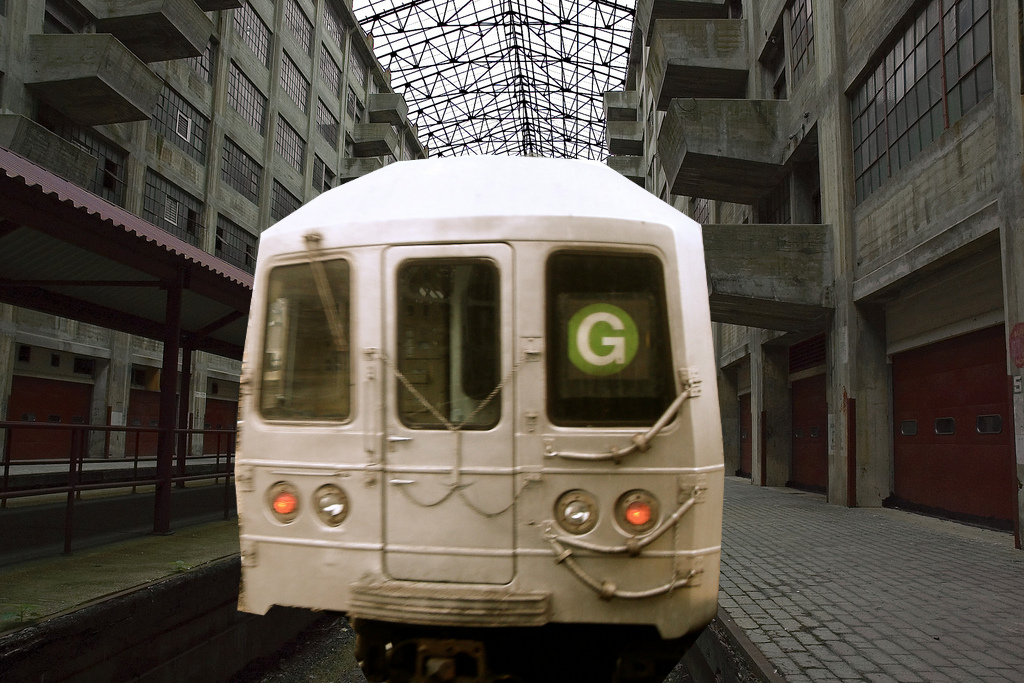
In June the Long Island Railroad instituted an "Atlantic Ticket" for people traveling on weekdays between southeast Queens and stops along Atlantic Avenue in Brooklyn. This fits with the RER, S-Bahn and Overground strategies that have been used in European cities like London, Paris and Berlin going back to the late nineteenth century. Instead of treating suburban trains like a completely separate system from the subways (and buses) they are run through the city center, at comparable frequencies to the subway, with the same fares and free transfers. So how does the Atlantic Ticket do in getting us to this goal of using our trains more efficiently?
Of the four differences between subways and commuter trains, the Atlantic Ticket addresses the fare difference and the lack of free transfers. They are the easiest to see: a rush hour commuter who takes the LIRR and the subway pays $13 one way or $346 monthly for a 55-minute trip from Rosedale to Grand Central, compared to $2.75 or $121 for 30 days for a much more crowded ride on a local bus to a subway. Many people take dollar vans to the subway, which brings the cost up to $4.75 one-way or $241 for 30 days. Riding the x63 express bus takes an hour and a half, but you get a seat and it's less than the railroad: $5.50 one way or $238 for 28 days.
The Atlantic Ticket offers a fare close to the express bus: $7.75 for a single one-way from Rosedale to Grand Central and $240 for 28 days. However, it is only good for travel to (or through) Flatbush Avenue, which takes about an hour and ten minutes from Rosedale to Grand Central. This is still quicker than the express bus, but about twenty minutes longer than LIRR trips through Penn Station. Surprisingly to me, it's also longer than taking a bus to the subway.
Why would someone pay extra for a longer ride? Comfort is one reason: LIRR trains are rarely packed, so even if they don't get a seat on the train they would expect some elbow room. But there's still a packed subway ride from Flatbush Avenue to Manhattan. Is riding a less crowded train for half an hour worth paying $3-5 more, but not worth $10.25 more? Maybe.
Another potential advantage is reliability. The subways and LIRR trains run on dedicated, grade-separated tracks controlled by the MTA. The buses and vans all run on busy avenues filled with other commuters. One insensitive driver can hold up bus riders for several minutes.
There's no word yet on how many people have been buying these Atlantic Tickets, but given the mixed benefits I suspect the number is relatively small. The LIRR Board Book this month credited the US Open golf tournament and the Belmont Stakes for increases in ridership (roughly 2% over last year), but did not mention the Atlantic Ticket at all. In a future post I'll talk about the two other factors, a direct ride (or at least a ride that is comfortable end to end), and frequency.
Here are some reasons to get people to shift from cars to transit:
Showing posts with label lirr. Show all posts
Saturday, September 29, 2018
Thursday, July 9, 2015
The Montauk Branch should go to Queens Plaza
I was pleased to see that Councilmember Elizabeth Crowley has come out in favor of restoring passenger service on the west end of the Long Island Rail Road's Montauk Branch, which actually goes from Jamaica to Long Island City. I took a Long Island Rail Road train along this once, years ago, when they still ran passenger trains. It was pointless except for a railfan experience: there was one train a day in each direction, and it went nonstop to Jamaica.
I'm not sure how light rail would coexist with the freight trains that still use the Branch, but with the Federal Railroad Administration making it easier to run lighter trains, there should be some relatively cost-effective way to run frequent service along the line, not only to the Atlas Park Mall in Glendale, but to Fresh Pond Road in Ridgewood, Forest View Crescent, Forest Park, and Hillside Avenue in Richmond Hill.
There is one change that I would strongly recommend at the western end that would make a huge difference in the value of the line. The old passenger service terminated at the old Long Island City station in Hunter's Point, which was once really convenient when it was served by frequent, massive ferries to Manhattan. Now it is a relatively long walk to the East River Ferry, which runs every twenty minutes, or a similarly long walk to the #7 train at Vernon Boulevard and Jackson Avenue, which is crowded at rush hour. You could move the station closer to Vernon-Jackson, but then it would be further from the ferry, and vice versa.
Instead of using the old Long Island City terminus, the passenger trains should use an existing flyover that crosses the Sunnyside Yards. This part of the Yards is currently being used as a staging area for the East Side Access project. There is room to build a two-track line along the north side of the Yards, terminating at a new station under Queens Boulevard. This would bring passengers one short block from the Queens Plaza subway station where they could change for the E, M or R trains.
For a light rail train, it might be possible to build another stop at Pearson Street, a block from Court Square. Depending on what gets built along Northern Boulevard, it might also be possible to extend the train east to 48th Street, Woodside Avenue or even Broadway. But regardless, the line should go to Queens Plaza. It would give residents of Ridgewood and Glendale better access to jobs and better connections to Manhattan.
I'm not sure how light rail would coexist with the freight trains that still use the Branch, but with the Federal Railroad Administration making it easier to run lighter trains, there should be some relatively cost-effective way to run frequent service along the line, not only to the Atlas Park Mall in Glendale, but to Fresh Pond Road in Ridgewood, Forest View Crescent, Forest Park, and Hillside Avenue in Richmond Hill.
There is one change that I would strongly recommend at the western end that would make a huge difference in the value of the line. The old passenger service terminated at the old Long Island City station in Hunter's Point, which was once really convenient when it was served by frequent, massive ferries to Manhattan. Now it is a relatively long walk to the East River Ferry, which runs every twenty minutes, or a similarly long walk to the #7 train at Vernon Boulevard and Jackson Avenue, which is crowded at rush hour. You could move the station closer to Vernon-Jackson, but then it would be further from the ferry, and vice versa.
Instead of using the old Long Island City terminus, the passenger trains should use an existing flyover that crosses the Sunnyside Yards. This part of the Yards is currently being used as a staging area for the East Side Access project. There is room to build a two-track line along the north side of the Yards, terminating at a new station under Queens Boulevard. This would bring passengers one short block from the Queens Plaza subway station where they could change for the E, M or R trains.
For a light rail train, it might be possible to build another stop at Pearson Street, a block from Court Square. Depending on what gets built along Northern Boulevard, it might also be possible to extend the train east to 48th Street, Woodside Avenue or even Broadway. But regardless, the line should go to Queens Plaza. It would give residents of Ridgewood and Glendale better access to jobs and better connections to Manhattan.
Saturday, November 8, 2014
Decking the Sunnyside Yards: the history of a fantasy
Becoming the Yards:
1643: Burger Jorrisen receives the first patent for farmland near the swamps surrounding the Dutch Kills.1861: The Long Island Railroad builds tracks from Hunters Point along the Dutch Kills to Jamaica.
1903: The Pennsylvania Railroad begins purchasing property in the area and draining the land.
1915: The Sunnyside Yards are opened.
(Background from the Greater Astoria Historical Society and Untapped Cities, among others.)
Development proposed on decks over the Yards:
1925: Post Office building1951: Transportation Hub
1971: Housing
1973: Sports stadium
1989: Housing and offices
1997: Olympic village
2006: Housing, stores, schools, playing fields and parks
2008: Housing
2014: A hospital, affordable housing buildings, a school, a public space or some combination of those
Wednesday, April 2, 2014
Light rail in New York City?
Last week I talked about the practical differences between light rail, streetcars, subways and commuter rail. We have light rail right across the river in Hudson County, and there have been several proposals for streetcars and light rail here in New York City. I want to mention a few possibilities and discuss their technical and political feasibility.
As I pointed out last week, the lower construction cost of streetcars and light rail comes primarily from shorter, lighter trains and lack of grade separation. These in turn limit your capacity and speed, meaning that if you build the wrong system you can wind up with overcrowded trains and frustrated passengers, and not get as many people out of their cars as you could with a heavier system. The consequences of this in turn are that if you can afford light rail, don't build a streetcar. If you can afford a subway or an el, don't build light rail.
With that in mind, consider Raanan Geberer's suggestion, "How about light rail on the old Rockaway line?" Geberer is clearly a supporter of transit and he's trying to be helpful, but the old Rockaway Beach Branch is completely grade-separated. It should be returned to Long Island Rail Road trains, or connected to the subway, along the lines of Capt. Subway's proposal, to take full advantage of its potential.
Some of the supporters of rail on the Rockaway Beach Branch have mentioned the possibility of running light rail from Rockaway Park or Ozone Park onto the old "Lower Montauk" branch to Long Island City. The problem is that there are at least two freight trains a day that use those tracks. Because of the Federal Railroad Administration rules, the only way to run light rail would be to limit the freight trains to overnight hours. Unfortunately, I don't see enough potential ridership to justify that time separation. It might be more feasible to run a short diesel-multiple-unit shuttle, especially if it could be done without paying a lot of conductors.
So why do people like Geberer seem to think light rail would be so much better than subways or commuter rail? They are claimed to be quieter, but this is not really true. Yes, the heavier the train the more noise it makes, but that's a relatively minor factor. The noise is primarily a function of the supporting structure. The #7 train is elevated on reinforced concrete in Sunnyside and plain old steel everywhere else. You can have a conversation under the el in Sunnyside, but not in Woodside or Corona. This would not change significantly if you ran light rail trains on the same structures.
The main argument given by proponents of light rail on these lines is that it is somehow more modern than subways or commuter rail. This is nonsense: many of the tracks of the Hudson-Bergen Light Rail saw trains long before subways ran in New York City, and many of the cars in use on the New York subway and the Long Island Railroad are newer than the cars on the HBLR.
Sadly, this seems to be another case of what Ryan McGreal called "cargo cult urbanism": if it works in Jersey City and Phoenix and Seattle, it should be the hot new thing here in New York. (Cyclists who promote "BRT" as a panacea seem to have a similar shallowness of thinking.) In part, it's because many of the most ambitious new train lines are being built as light rail in places like Salt Lake City and Charlotte.
The thing is that those lines are being built as light rail for two reasons: (1) freight railroads have been abandoning their less-used lines all over the country, and (2) any new rail lines have faced such stiff competition from new highways that ridership projections haven't justified grade separation. Neither of those apply here in New York City. There is still a market for freight trains on the Bushwick, Bay Ridge and Montauk Branches and the Oak Point Link in the Bronx. None of these railroads are going to be abandoned any time soon. And there is such demand for transit that we could pack any new light rail trains that are run.
So I've pretty much ruled out mixed-traffic streetcars and legacy-freight light rail here in New York City. The one area where light rail or streetcars would make sense here is if we can dedicate lanes to them. If we can dedicate lanes to buses, we can dedicate them to streetcars or light rail. I looked at this issue almost six years ago, but it might be time for a re-look soon.
As I pointed out last week, the lower construction cost of streetcars and light rail comes primarily from shorter, lighter trains and lack of grade separation. These in turn limit your capacity and speed, meaning that if you build the wrong system you can wind up with overcrowded trains and frustrated passengers, and not get as many people out of their cars as you could with a heavier system. The consequences of this in turn are that if you can afford light rail, don't build a streetcar. If you can afford a subway or an el, don't build light rail.
With that in mind, consider Raanan Geberer's suggestion, "How about light rail on the old Rockaway line?" Geberer is clearly a supporter of transit and he's trying to be helpful, but the old Rockaway Beach Branch is completely grade-separated. It should be returned to Long Island Rail Road trains, or connected to the subway, along the lines of Capt. Subway's proposal, to take full advantage of its potential.
Some of the supporters of rail on the Rockaway Beach Branch have mentioned the possibility of running light rail from Rockaway Park or Ozone Park onto the old "Lower Montauk" branch to Long Island City. The problem is that there are at least two freight trains a day that use those tracks. Because of the Federal Railroad Administration rules, the only way to run light rail would be to limit the freight trains to overnight hours. Unfortunately, I don't see enough potential ridership to justify that time separation. It might be more feasible to run a short diesel-multiple-unit shuttle, especially if it could be done without paying a lot of conductors.
So why do people like Geberer seem to think light rail would be so much better than subways or commuter rail? They are claimed to be quieter, but this is not really true. Yes, the heavier the train the more noise it makes, but that's a relatively minor factor. The noise is primarily a function of the supporting structure. The #7 train is elevated on reinforced concrete in Sunnyside and plain old steel everywhere else. You can have a conversation under the el in Sunnyside, but not in Woodside or Corona. This would not change significantly if you ran light rail trains on the same structures.
The main argument given by proponents of light rail on these lines is that it is somehow more modern than subways or commuter rail. This is nonsense: many of the tracks of the Hudson-Bergen Light Rail saw trains long before subways ran in New York City, and many of the cars in use on the New York subway and the Long Island Railroad are newer than the cars on the HBLR.
Sadly, this seems to be another case of what Ryan McGreal called "cargo cult urbanism": if it works in Jersey City and Phoenix and Seattle, it should be the hot new thing here in New York. (Cyclists who promote "BRT" as a panacea seem to have a similar shallowness of thinking.) In part, it's because many of the most ambitious new train lines are being built as light rail in places like Salt Lake City and Charlotte.
The thing is that those lines are being built as light rail for two reasons: (1) freight railroads have been abandoning their less-used lines all over the country, and (2) any new rail lines have faced such stiff competition from new highways that ridership projections haven't justified grade separation. Neither of those apply here in New York City. There is still a market for freight trains on the Bushwick, Bay Ridge and Montauk Branches and the Oak Point Link in the Bronx. None of these railroads are going to be abandoned any time soon. And there is such demand for transit that we could pack any new light rail trains that are run.
So I've pretty much ruled out mixed-traffic streetcars and legacy-freight light rail here in New York City. The one area where light rail or streetcars would make sense here is if we can dedicate lanes to them. If we can dedicate lanes to buses, we can dedicate them to streetcars or light rail. I looked at this issue almost six years ago, but it might be time for a re-look soon.
Sunday, March 9, 2014
Getting into Manhattan
I've got a whole bunch of ideas for subway and bus expansions in the boroughs, commuter rail and bus expansions in the suburbs, and even intercity rail and bus connections. They all wash up against one big problem: the capacity of crossings into and out of Manhattan is almost maxed out at peak commuting times, the few big expansions in the works are proceeding slowly, and there doesn't seem to be political will to do much more.
Of the subways that cross the East River and the PATH trains that cross the Hudson, almost all the bridges and tunnels are packed with trains at rush hour, and those trains packed with passengers. The one exception is the Williamsburg Bridge, which is constrained by technical challenges, by the depopulation of South Side Williamsburg, Bushwick and East New York, by zoning restrictions on building, and by the fact that the J and Z trains only go to lower Manhattan. Since the MTA rerouted the M train to Midtown, ridership has gone up, and so have rents in Ridgewood, but that is the only line that is not at full capacity.
The only new subway crossing that has been given serious consideration recently, the Subway to Secaucus, has been stuck on a shelf somewhere.
MTA Capital Construction has installed an improved signalling system (CBTC) on the L line, which has allowed them to run more trains through the Fourteenth Street Tunnel. This capacity has been rapidly filled by an increase in ridership. They are rolling out CBTC to other lines, as the Port Authority is doing with the PATH trains, but funding limitations have stretched the rollout over years. As with the L train, the increased capacity is not expected to be enough to handle an additional branch on any line, only to allow neighborhoods near the existing branches to add population and to give some breathing room to passengers.
With commuter rail, the constraints are the platforms at Penn Station and the Park Avenue Tunnel. Alon Levy pointed out years ago that the constraints at Penn Station are not technical, but due to the three government-run commuter rail agencies' insistence on terminating all trains there, and our politicians' inability to force them to implement through-running arrangements.
For years the MTA has been pouring billions of dollars into East Side Access, but that will not be finished until 2023 at the earliest. The ARC Tunnel from New Jersey and its successor, the Gateway Tunnel, are being blocked by Governor Christie, who has used ARC funding to pay for road expansions.
Bus capacity into Manhattan is similarly constrained. Buses crossing from New Jersey through the Lincoln Tunnel can terminate at the Port Authority Bus Terminal, but that is also full. Proposals to build garages with public funds have faltered, and no private company seems interested in building a garage or terminal. The Port Authority is renovating the George Washington Bridge terminal, but that is too far north, and connects to a downtown A train that is also very crowded.
Any buses that can't fit into the Port Authority use city streets to pick up and drop off, as do buses from the other crossings. A backlash from NIMBYs, mostly drivers and business owners but aided by misguided pedestrian advocates, has put a lid on any expansion of curbside bus access.
As with commuter trains, there is a potential for through-running with buses along 34th or 42nd streets or Church Street that could relieve some of these constraints, but the bus operators have shown little interest, and political leaders have been too busy pandering to the backlash.
One reason bus operators may be uninterested in through-running or building terminals or garages is that there are also capacity constraints for buses on the bridges and tunnels. Anyone who's tried to take the Q32 into Manhattan in the morning knows what happens to bus travel times when a bridge is free for any vehicle. Passengers on the inbound QM5 express bus know that things run a little smoother when there is a toll and a bus lane, and people who have ridden the Red and Tan number 20 know that congestion pricing makes it even better. But even those passengers say that the bus lanes are too short, and those crossings with lanes and tolls are at capacity as well.
So that's the dismal state of getting commuters to Manhattan. What should we do about it? I'll talk about that in future posts.
Of the subways that cross the East River and the PATH trains that cross the Hudson, almost all the bridges and tunnels are packed with trains at rush hour, and those trains packed with passengers. The one exception is the Williamsburg Bridge, which is constrained by technical challenges, by the depopulation of South Side Williamsburg, Bushwick and East New York, by zoning restrictions on building, and by the fact that the J and Z trains only go to lower Manhattan. Since the MTA rerouted the M train to Midtown, ridership has gone up, and so have rents in Ridgewood, but that is the only line that is not at full capacity.
The only new subway crossing that has been given serious consideration recently, the Subway to Secaucus, has been stuck on a shelf somewhere.
MTA Capital Construction has installed an improved signalling system (CBTC) on the L line, which has allowed them to run more trains through the Fourteenth Street Tunnel. This capacity has been rapidly filled by an increase in ridership. They are rolling out CBTC to other lines, as the Port Authority is doing with the PATH trains, but funding limitations have stretched the rollout over years. As with the L train, the increased capacity is not expected to be enough to handle an additional branch on any line, only to allow neighborhoods near the existing branches to add population and to give some breathing room to passengers.
With commuter rail, the constraints are the platforms at Penn Station and the Park Avenue Tunnel. Alon Levy pointed out years ago that the constraints at Penn Station are not technical, but due to the three government-run commuter rail agencies' insistence on terminating all trains there, and our politicians' inability to force them to implement through-running arrangements.
For years the MTA has been pouring billions of dollars into East Side Access, but that will not be finished until 2023 at the earliest. The ARC Tunnel from New Jersey and its successor, the Gateway Tunnel, are being blocked by Governor Christie, who has used ARC funding to pay for road expansions.
Bus capacity into Manhattan is similarly constrained. Buses crossing from New Jersey through the Lincoln Tunnel can terminate at the Port Authority Bus Terminal, but that is also full. Proposals to build garages with public funds have faltered, and no private company seems interested in building a garage or terminal. The Port Authority is renovating the George Washington Bridge terminal, but that is too far north, and connects to a downtown A train that is also very crowded.
Any buses that can't fit into the Port Authority use city streets to pick up and drop off, as do buses from the other crossings. A backlash from NIMBYs, mostly drivers and business owners but aided by misguided pedestrian advocates, has put a lid on any expansion of curbside bus access.
As with commuter trains, there is a potential for through-running with buses along 34th or 42nd streets or Church Street that could relieve some of these constraints, but the bus operators have shown little interest, and political leaders have been too busy pandering to the backlash.
One reason bus operators may be uninterested in through-running or building terminals or garages is that there are also capacity constraints for buses on the bridges and tunnels. Anyone who's tried to take the Q32 into Manhattan in the morning knows what happens to bus travel times when a bridge is free for any vehicle. Passengers on the inbound QM5 express bus know that things run a little smoother when there is a toll and a bus lane, and people who have ridden the Red and Tan number 20 know that congestion pricing makes it even better. But even those passengers say that the bus lanes are too short, and those crossings with lanes and tolls are at capacity as well.
So that's the dismal state of getting commuters to Manhattan. What should we do about it? I'll talk about that in future posts.
Wednesday, February 5, 2014
The expense of East Side Access
The news is that the Long Island Rail Road East Side Access project, initially forecast to cost $4.3 billion and be completed in 2009 is not due to open until 2023, and it will cost $10.8 billion. Some have faulted the tunneling process and the engineers' estimates of the cost. Some have faulted the decision to run the trains into a deep cavern under Grand Central rather than on the loop tracks. I agree completely. But it recently occurred to me that a big part of the expense and delay - what makes it "the biggest " is a tunnel. Not the tunnel under the East River, that was dug 44 years ago. A tunnel through unstable soil in a filled swamp under the Sunnyside rail yards.
And why dig a tunnel? If you're building a new track that crosses an old track, the cheapest option is an at-grade crossing, but with two busy new tracks crossing lots of existing tracks - including storage tracks with trains parked on them and eight of the busiest tracks in the country - it's easy to see why the design team ruled out that option. It's harder to see why they ruled out a bridge. The yards are in a valley. Just a few blocks west, Queens Boulevard and the three tracks of very busy #7 train line have been crossing them on a double-decker bridge for over a century. There are five or six other bridges, depending on how you count.
There's no concern about blocking the sunlight because the only people in that yard are railroad employees. Sometimes a tunnel is chosen over a bridge to mitigate noise, but the trains will emerge from the tunnel close to the densest residential population, in Sunnyside Gardens. Grade elevation isn't a major concern because the yards are wide and the northernmost tracks are elevated, allowing for a relatively gentle slope, but if the grade is too steep, it would be possible to put in a bend.
And yet in the Final Environmental Impact Statement there is only one option considered for the Queens route: "crossing beneath the railroad yards." There's only one real reason I can think of to tunnel instead of building a bridge: a tunnel would get in the way of the convention center.
For years, developers, city planners and politicians have been quietly preparing to build a deck over the Yards and develop the area. Because NIMBYs were so successful at "protecting the residential quality" of most of the city's neighborhoods, the amount of new housing that can be built as of right in the city is not enough to accommodate everyone who wants to live here and bring rents down. Planners and developers see one of the largest uninhabited areas in the city, right next to the huge Queens Plaza station and the underused 36th Street stop, and they want to put something there. It figured prominently in the city's discussions about Olympic development, and a report from Alex Garvin and Associates to the Economic Development Corporation in 2006 called it "the city's single greatest opportunity to increase the housing supply and simultaneously improve the quality of the public realm."
Building over a rail yard is a strategy that made millions for the New York Central Railroad a hundred years ago. Railroad managers, now mostly government employees in the city, long to replicate that success. That was the idea behind the Atlantic Yards development in Brooklyn and now the Hudson Yards development in Manhattan, and they've got other yards in the Bronx to follow Sunnyside. Never mind that Atlantic Yards was a crappy deal for the MTA and the Hudson Yards isn't looking quite as successful as forecast. The city's elites are still hung up on the idea: in 2012 Dan Doctoroff found some interest for it at the Municipal Art Society.
If you look at the map above, the East Side Access tunnel is there, under sections B and C. If it had been built as a bridge, at least part of it would be right where the deck would go, and get in the way of some of the buildings and streets.
I don't know for sure how much the East Side Access designers were thinking about this. But if it played a role at all in their decision to dig a phenomenally expensive tunnel instead of building a bridge, then a significant portion of this multi-billion-dollar federally-funded "transit" project is actually subsidizing a possible future residential and commercial mega-project. Yay?
And why dig a tunnel? If you're building a new track that crosses an old track, the cheapest option is an at-grade crossing, but with two busy new tracks crossing lots of existing tracks - including storage tracks with trains parked on them and eight of the busiest tracks in the country - it's easy to see why the design team ruled out that option. It's harder to see why they ruled out a bridge. The yards are in a valley. Just a few blocks west, Queens Boulevard and the three tracks of very busy #7 train line have been crossing them on a double-decker bridge for over a century. There are five or six other bridges, depending on how you count.
There's no concern about blocking the sunlight because the only people in that yard are railroad employees. Sometimes a tunnel is chosen over a bridge to mitigate noise, but the trains will emerge from the tunnel close to the densest residential population, in Sunnyside Gardens. Grade elevation isn't a major concern because the yards are wide and the northernmost tracks are elevated, allowing for a relatively gentle slope, but if the grade is too steep, it would be possible to put in a bend.
And yet in the Final Environmental Impact Statement there is only one option considered for the Queens route: "crossing beneath the railroad yards." There's only one real reason I can think of to tunnel instead of building a bridge: a tunnel would get in the way of the convention center.
For years, developers, city planners and politicians have been quietly preparing to build a deck over the Yards and develop the area. Because NIMBYs were so successful at "protecting the residential quality" of most of the city's neighborhoods, the amount of new housing that can be built as of right in the city is not enough to accommodate everyone who wants to live here and bring rents down. Planners and developers see one of the largest uninhabited areas in the city, right next to the huge Queens Plaza station and the underused 36th Street stop, and they want to put something there. It figured prominently in the city's discussions about Olympic development, and a report from Alex Garvin and Associates to the Economic Development Corporation in 2006 called it "the city's single greatest opportunity to increase the housing supply and simultaneously improve the quality of the public realm."
Building over a rail yard is a strategy that made millions for the New York Central Railroad a hundred years ago. Railroad managers, now mostly government employees in the city, long to replicate that success. That was the idea behind the Atlantic Yards development in Brooklyn and now the Hudson Yards development in Manhattan, and they've got other yards in the Bronx to follow Sunnyside. Never mind that Atlantic Yards was a crappy deal for the MTA and the Hudson Yards isn't looking quite as successful as forecast. The city's elites are still hung up on the idea: in 2012 Dan Doctoroff found some interest for it at the Municipal Art Society.
If you look at the map above, the East Side Access tunnel is there, under sections B and C. If it had been built as a bridge, at least part of it would be right where the deck would go, and get in the way of some of the buildings and streets.
I don't know for sure how much the East Side Access designers were thinking about this. But if it played a role at all in their decision to dig a phenomenally expensive tunnel instead of building a bridge, then a significant portion of this multi-billion-dollar federally-funded "transit" project is actually subsidizing a possible future residential and commercial mega-project. Yay?
Labels:
amtrak,
boondoggle,
commuter rail,
feds,
lirr,
Queens
Sunday, January 12, 2014
Off-peak service frequencies on the Long Island Rail Road
I made this map of off-peak service frequencies on the Long Island Rail Road.
Click through to see it full size.
Monday, September 2, 2013
Take the Chinatown Van to the U.S. Open
There were some chuckles on my Twitter feed over the Times article about U.S. Open champion tennis players getting stuck in traffic as they were being chauffeured from Manhattan hotels to the courts in Queens. If you absolutely must stay at a five-star hotel in Midtown, well, I'm afraid you will just have to leave early and sit in traffic. If you're prepared to be a bit more flexible, there are several alternatives, and they'll will work if you're a US Open spectator as well.
- Get a hotel near Flushing Meadows. There are many fine hotels within a ten-minute chauffeured car ride of the Tennis Center, including ten that are conveniently located near the food and nightlife of Downtown Flushing. There are even two four-star hotels in the area, but they're a bit more isolated and car ride would be a little longer.
- The Long Island Rail Road. You can stay at the four-star Hotel Pennsylvania, right above Penn Station, and take the train right to the park. You may have to deal with some crowds along the way, but you'll probably get a seat, especially if you wear your tennis whites, and the trip is under half an hour if you time it right.
- The number 7 train. This was recommended by a number of people, but I honestly can't recommend it. The 7 is my train, and the entire tournament it's been packed with tennis fans. If crowds (as in, someone's texting hand in your shoulder blade crowds) help your game, go for it. Otherwise, consider alternate routes.
- The Chinatown van. They leave as soon as they're full, so you always get a seat! From the three-star Hotel Mulberry, it's a short walk down to Division Street, where the vans load up just east of the Bowery. For two dollars, you get a ride to Flushing, often with Chinese pop or opera music. In Flushing, most of the vans will let you off at College Point Boulevard and 59th Avenue, where you can walk through the park to the tennis center. If you speak a Chinese language you can ask ahead of time, but generally if you're not on the highway you can just call out, "Stop, please!"
To return to Manhattan you'll have to catch the vans in Flushing, on 41st Avenue just off of Main Street, but you can get there by the #7 train from the park (which will be much less crowded than the opposite direction) and have a tasty Sichuan dinner in Flushing after the match.
Monday, April 15, 2013
In 2013, subways raise property values
Suppose that you live in a detached single-family home a block from the old Brooklyn Manor train station in Woodhaven. Your neighbors are selling a house a lot like yours, containing about 2000 square feet of floor area on a 5,000 square foot lot abutting the Rockaway Beach Branch railroad embankment, for $439,000.
That's one of the few houses that can even be sold; Zillow says that 20-30% of mortgages in this area are underwater. You want to see your property values go up. Maybe your mortgage is underwater; maybe you just want to get a good price when you're ready to sell. What can you do? Reactivate the railroad.
Your house is currently an hour door-to-door from downtown Manhattan on the rickety, unreliable J or Z tracks. If you're trying to get to Midtown, where there are more jobs, you would have to change for the F or M trains, adding another fifteen minutes. But what if you could cut that travel time to forty-five minutes, say by running the R train on the Rockaway Branch tracks? We don't have to imagine; we can just look at a very similar train line.
This 15000 square foot house, 2163 East 15th Street in Brooklyn, is currently for sale at $489,000. That's $50,000 more than your neighbor is asking, for a house that's a little smaller. Okay, your neighbor's house has termite damage, but it also has a huge back yard with no trains running on the tracks.
If you compare properties along the Q train in Sheepshead Bay and Homecrest you find that they're typically $100-200,000 more than you would get for "comparable" properties along the Rockaway Branch, like this 1600 square foot semi-attached house asking $729,000. And according to Zillow, only 5-10% of mortgages are underwater. That 15-30 minute difference in commute time makes a big difference in home prices. Crime is lower, too.
This may be a surprise to you. You may remember the sixties and seventies, when properties near active train lines went down in price and properties near highways went up. Things have changed. People can't afford to drive, and they're realizing that the train and the city aren't so bad.
What about the opposite problem, gentrification? Well, I took a walk through Sheepshead Bay yesterday, and let's just say I didn't see any creative facial hair or skinny jeans. Don't take my word for it; go look for yourself.
Reopening the Brooklyn Manor train station would be a huge boon to people who live nearby. But you can only do it if you get out of the 1970s mental traffic jam and ride the train into the twenty-first century. Please, sign the two petitions to reopen the Rockway Beach Branch, on change.org and on Assemblymember Goldfeder's site.
That's one of the few houses that can even be sold; Zillow says that 20-30% of mortgages in this area are underwater. You want to see your property values go up. Maybe your mortgage is underwater; maybe you just want to get a good price when you're ready to sell. What can you do? Reactivate the railroad.
Your house is currently an hour door-to-door from downtown Manhattan on the rickety, unreliable J or Z tracks. If you're trying to get to Midtown, where there are more jobs, you would have to change for the F or M trains, adding another fifteen minutes. But what if you could cut that travel time to forty-five minutes, say by running the R train on the Rockaway Branch tracks? We don't have to imagine; we can just look at a very similar train line.
This 15000 square foot house, 2163 East 15th Street in Brooklyn, is currently for sale at $489,000. That's $50,000 more than your neighbor is asking, for a house that's a little smaller. Okay, your neighbor's house has termite damage, but it also has a huge back yard with no trains running on the tracks.
If you compare properties along the Q train in Sheepshead Bay and Homecrest you find that they're typically $100-200,000 more than you would get for "comparable" properties along the Rockaway Branch, like this 1600 square foot semi-attached house asking $729,000. And according to Zillow, only 5-10% of mortgages are underwater. That 15-30 minute difference in commute time makes a big difference in home prices. Crime is lower, too.
This may be a surprise to you. You may remember the sixties and seventies, when properties near active train lines went down in price and properties near highways went up. Things have changed. People can't afford to drive, and they're realizing that the train and the city aren't so bad.
What about the opposite problem, gentrification? Well, I took a walk through Sheepshead Bay yesterday, and let's just say I didn't see any creative facial hair or skinny jeans. Don't take my word for it; go look for yourself.
Reopening the Brooklyn Manor train station would be a huge boon to people who live nearby. But you can only do it if you get out of the 1970s mental traffic jam and ride the train into the twenty-first century. Please, sign the two petitions to reopen the Rockway Beach Branch, on change.org and on Assemblymember Goldfeder's site.
Monday, January 21, 2013
Guest Post: How sending the R train to Howard Beach can help the G go to Forest Hills
By Capt. Subway
The controversy over what to do with the 3.5-mile long abandoned northern section of the defunct LIRR Rockaway Line between Ozone Park and Rego Park has once again made it into a major newspaper, in this case in an article in the New York Times about a week ago. In that article we learned that the state will be awarding a $500,000 grant to the Trust for Public Land to study the QueensWay proposal to turn the abandoned railroad right-of-way into a linear park and biking/walking trail. It is rather curious that no equivalent grant is being made to the groups – and such people and groups do exist – advocating that the line should be resurrected as a – hold your hats - rail line. An extension of the "R" subway line, in fact.
The advocates for the Greenway insist that the revived line would accomplish little and that few people would ride. Oh really – a line that parallels the heavily trafficked Woodhaven Boulevard corridor – a line that would provide a one seat connection from densely settled Queens neighborhoods like Rego Park, Jackson Heights, Woodside, Astoria and Long Island City to East and West Midtown, that would provide possible transfer connections to the IND "A" and BMT "J" lines, and that would also serve neighborhoods of moderate density in central Queens that have no heavy rail access at this time – no one’s going to ride it?
Furthermore the Greenway crowd says that reviving the line would be too costly. Yes much work would be needed to get it back up and running. But as compared to constructing a wholly new rail line the cost of getting the defunct line back in working order would be a genuine bargain, probably around one tenth the cost of new construction.
Many people have argued that the line should be reactivated as a branch of the Long Island Rail Road. This would be better than a greenway, but not as good as a connection to the Queens Boulevard subway line. The capacity of the Queens Boulevard line is determined by a combination of signaling along each of its four tracks and by its terminal capacity, i.e. the ability of the terminal stations, 71-Continental Avenue-Forest Hills, 179th Street and Parsons/Archer to process or relay arriving and departing trains. The express tracks are, happily, operating at the current design capacity of 30 trains per hour.
Unfortunately the local tracks, while also theoretically capable of 30 trains per hour, are presently only running at about 20 trains per hour in the peak period. This is necessitated by the terminal at 71-Continental, which can only turn around about 20 trains per hour at the limit, and that not very well. For this reason the 63rd St connection to Queens Boulevard required a "robbing from Peter to pay Paul" switcheroo: the "G" line had to be cut back to Court Square and its slots on Queens Boulevard given over to another, Manhattan oriented service, first to the "V", and now to the "M". (For the first few years the “G” line ran to and from Forest Hills nights and weekends, when there was no "V" train service. But this passenger friendly part-time service died to make weekend service changes more doable).
Of course it needn’t be that way. Even in the original MTA plans from the late ‘60s "G" service would have remained intact. The express by-pass alone would have insured this. This is where the old LIRR Rock Line comes into play. By connecting this line to the Queens Boulevard line east (subway north) of 63rd Drive station – the tunnel bell mouths are there specifically for that scenario – the path to another local service terminal would be created, i.e. now the "G", along with the "M" and "R" could run along the Queens Boulevard local tracks, with one of these service branching off after 63rd Drive and heading off to a new terminal at either Howard Beach or, it would be hoped, JFK, and thus not threatening to overwhelm 71-Continental as a terminal. In this way peak trains per hour on the Queens Boulevard local tracks could be raised from the present day 20 trains per hour up to 27 ½ trains per hour, given the current timetables on those three lines. This would be a significant improvement in service, especially if the "G" were equipped with full length trains.
These are the transit advantages of reactivating the Rockaway Branch as a subway line. Neighborhoods like Woodhaven, Rego Park and Ozone Park get quicker service to Midtown. Greenpoint and Williamsburg can be reconnected to Astoria and Jackson Heights with revived G train service. Local stations on the Queens Boulevard line see seven more trains an hour.
These benefits are worth the money. This is something we can do. If you agree, sign our petition to Governor Cuomo and be counted.
Capt Subway is a Queens resident and transit advocate with 37 years of experience working for the New York City Transit Authority, including Senior Schedule Manager. He has had his alias for at least as long as I've had mine.
The controversy over what to do with the 3.5-mile long abandoned northern section of the defunct LIRR Rockaway Line between Ozone Park and Rego Park has once again made it into a major newspaper, in this case in an article in the New York Times about a week ago. In that article we learned that the state will be awarding a $500,000 grant to the Trust for Public Land to study the QueensWay proposal to turn the abandoned railroad right-of-way into a linear park and biking/walking trail. It is rather curious that no equivalent grant is being made to the groups – and such people and groups do exist – advocating that the line should be resurrected as a – hold your hats - rail line. An extension of the "R" subway line, in fact.
The advocates for the Greenway insist that the revived line would accomplish little and that few people would ride. Oh really – a line that parallels the heavily trafficked Woodhaven Boulevard corridor – a line that would provide a one seat connection from densely settled Queens neighborhoods like Rego Park, Jackson Heights, Woodside, Astoria and Long Island City to East and West Midtown, that would provide possible transfer connections to the IND "A" and BMT "J" lines, and that would also serve neighborhoods of moderate density in central Queens that have no heavy rail access at this time – no one’s going to ride it?
Furthermore the Greenway crowd says that reviving the line would be too costly. Yes much work would be needed to get it back up and running. But as compared to constructing a wholly new rail line the cost of getting the defunct line back in working order would be a genuine bargain, probably around one tenth the cost of new construction.
Many people have argued that the line should be reactivated as a branch of the Long Island Rail Road. This would be better than a greenway, but not as good as a connection to the Queens Boulevard subway line. The capacity of the Queens Boulevard line is determined by a combination of signaling along each of its four tracks and by its terminal capacity, i.e. the ability of the terminal stations, 71-Continental Avenue-Forest Hills, 179th Street and Parsons/Archer to process or relay arriving and departing trains. The express tracks are, happily, operating at the current design capacity of 30 trains per hour.
Unfortunately the local tracks, while also theoretically capable of 30 trains per hour, are presently only running at about 20 trains per hour in the peak period. This is necessitated by the terminal at 71-Continental, which can only turn around about 20 trains per hour at the limit, and that not very well. For this reason the 63rd St connection to Queens Boulevard required a "robbing from Peter to pay Paul" switcheroo: the "G" line had to be cut back to Court Square and its slots on Queens Boulevard given over to another, Manhattan oriented service, first to the "V", and now to the "M". (For the first few years the “G” line ran to and from Forest Hills nights and weekends, when there was no "V" train service. But this passenger friendly part-time service died to make weekend service changes more doable).
Of course it needn’t be that way. Even in the original MTA plans from the late ‘60s "G" service would have remained intact. The express by-pass alone would have insured this. This is where the old LIRR Rock Line comes into play. By connecting this line to the Queens Boulevard line east (subway north) of 63rd Drive station – the tunnel bell mouths are there specifically for that scenario – the path to another local service terminal would be created, i.e. now the "G", along with the "M" and "R" could run along the Queens Boulevard local tracks, with one of these service branching off after 63rd Drive and heading off to a new terminal at either Howard Beach or, it would be hoped, JFK, and thus not threatening to overwhelm 71-Continental as a terminal. In this way peak trains per hour on the Queens Boulevard local tracks could be raised from the present day 20 trains per hour up to 27 ½ trains per hour, given the current timetables on those three lines. This would be a significant improvement in service, especially if the "G" were equipped with full length trains.
These are the transit advantages of reactivating the Rockaway Branch as a subway line. Neighborhoods like Woodhaven, Rego Park and Ozone Park get quicker service to Midtown. Greenpoint and Williamsburg can be reconnected to Astoria and Jackson Heights with revived G train service. Local stations on the Queens Boulevard line see seven more trains an hour.
These benefits are worth the money. This is something we can do. If you agree, sign our petition to Governor Cuomo and be counted.
Capt Subway is a Queens resident and transit advocate with 37 years of experience working for the New York City Transit Authority, including Senior Schedule Manager. He has had his alias for at least as long as I've had mine.
Thursday, November 22, 2012
Real Rockaway train service
As I've written before, the Rockaway Peninsula is one of the least sustainable places in the New York area. This sand bar might be okay for some cheap, replaceable summer bungalows and amusement parks, but it's no place for year-round inhabitants, much less large public housing projects. It's definitely not a place where you'd want to sink lots of money into expensive road infrastructure, but that's what the state has done, and every time it tries to charge people a reasonable fee for maintaining this massive system, they whine about it. The residents also made the mistake of depending for their power on bad sources, first on organized crime and nuclear fission, then on a legitimately underfunded but inept state agency.
For all their tough talk, it sounds like the Governor and the Mayor have passed up the opportunity to dump this money pit. We will rebuild, apparently. We'll rebuild the acres of single-family homes sprawled across the sand. We'll rebuild the parts of the housing projects that were damaged. We'll rebuild the train bridge that makes the commute slightly less polluting. We'll rebuild the telephone poles.
One of the most obnoxious elements of this whole thing was the pride that the MTA staff displayed in putting twenty R32 cars onto flatbed trucks and driving them over to the Rockaways. Don't they get it that this is really bad symbolism? Every time a train car is loaded onto a truck it sends the message that cars and trucks are the "real" transportation, and we have to do all kinds of things with them to get the trains working. On the other hand, these are probably the same MTA managers who live in East Northport and drive to their train yards and bus depots. Their entire lives are spent driving to run a transit system, so how can they ever imagine it could be any other way?
It's not clear how long it will take to restore the trestle across the bay, but the MTA could use some of the reconstruction money to restore the original tracks that went to Rockaway from Valley Stream. That connection came in handy in 1950 when the trestle was destroyed in a fire, and the Long Island Rail Road was able to run trains through Far Rockaway, as shown in this schedule:
Did they learn from that bit of resilience? Nah. In 1956 the LIRR sold the trestle and the peninsular tracks to the city, and in 1958 a quarter mile of track was removed in Far Rockaway. In 1966 the State took over the LIRR, and in 1968 it took over New York City transit, but it didn't rebuild the connection. A supermarket has been built across the old right-of-way, as you can see in this satellite picture:
If the track connection were still there, it would have been a relatively simple matter to move the trains. Better yet, the LIRR could have run trains direct from Penn Station. They wouldn't have to take an hour and a half like they did in 1951, if they went express from Far Rockaway to Valley Stream.
I don't know exactly how much it would cost to buy out the supermarket, rebuild the tracks and adjust the stations platforms for LIRR train cars, but probably only a couple million dollars. For a few million more you could build an elevated trestle over the supermarket and not even have to demolish it. Sure, it's a lot of money, but probably nothing compared to what we're spending to rebuild the trestle across the bay.
On one level, all of this is silly, because we simply can't afford to keep people living on a sand bar year round. It'd be a lot simpler if the train line just had to serve beachgoers; it could be rebuilt every spring if need be. But if we're going to have people living out there all year, they should have some real train service, and despite what Gridlock Sam may say, we shouldn't lower the tolls. That would ensure that they will drive for years more, keeping the trains empty and heavily subsidized.
For all their tough talk, it sounds like the Governor and the Mayor have passed up the opportunity to dump this money pit. We will rebuild, apparently. We'll rebuild the acres of single-family homes sprawled across the sand. We'll rebuild the parts of the housing projects that were damaged. We'll rebuild the train bridge that makes the commute slightly less polluting. We'll rebuild the telephone poles.
One of the most obnoxious elements of this whole thing was the pride that the MTA staff displayed in putting twenty R32 cars onto flatbed trucks and driving them over to the Rockaways. Don't they get it that this is really bad symbolism? Every time a train car is loaded onto a truck it sends the message that cars and trucks are the "real" transportation, and we have to do all kinds of things with them to get the trains working. On the other hand, these are probably the same MTA managers who live in East Northport and drive to their train yards and bus depots. Their entire lives are spent driving to run a transit system, so how can they ever imagine it could be any other way?
It's not clear how long it will take to restore the trestle across the bay, but the MTA could use some of the reconstruction money to restore the original tracks that went to Rockaway from Valley Stream. That connection came in handy in 1950 when the trestle was destroyed in a fire, and the Long Island Rail Road was able to run trains through Far Rockaway, as shown in this schedule:
Did they learn from that bit of resilience? Nah. In 1956 the LIRR sold the trestle and the peninsular tracks to the city, and in 1958 a quarter mile of track was removed in Far Rockaway. In 1966 the State took over the LIRR, and in 1968 it took over New York City transit, but it didn't rebuild the connection. A supermarket has been built across the old right-of-way, as you can see in this satellite picture:
If the track connection were still there, it would have been a relatively simple matter to move the trains. Better yet, the LIRR could have run trains direct from Penn Station. They wouldn't have to take an hour and a half like they did in 1951, if they went express from Far Rockaway to Valley Stream.
I don't know exactly how much it would cost to buy out the supermarket, rebuild the tracks and adjust the stations platforms for LIRR train cars, but probably only a couple million dollars. For a few million more you could build an elevated trestle over the supermarket and not even have to demolish it. Sure, it's a lot of money, but probably nothing compared to what we're spending to rebuild the trestle across the bay.
On one level, all of this is silly, because we simply can't afford to keep people living on a sand bar year round. It'd be a lot simpler if the train line just had to serve beachgoers; it could be rebuilt every spring if need be. But if we're going to have people living out there all year, they should have some real train service, and despite what Gridlock Sam may say, we shouldn't lower the tolls. That would ensure that they will drive for years more, keeping the trains empty and heavily subsidized.
Monday, May 14, 2012
This is a G train to Brooklyn Army Terminal...
Last month, Manhattan Borough President and mayoral hopeful Scott Stringer revived hopes for what he called "the X line," also known as the Tribororx. This line was proposed in the Third Regional Plan in 1996. In 2007 Michael Frumin, now an MTA manager, worked with the Regional Plan Association to flesh out the idea. The proposal was to run rapid transit along existing rail rights-of-way from the Brooklyn Army Terminal in Bay Ridge to Yankee Stadium in the Bronx.
There have been objections about using the right of way for rapid transit. The old New York Central Port Morris Branch in the Bronx is the only portion that is currently unused. The Hell Gate Bridge is used by freight and Amtrak trains. The rest of the way is occupied by the New York Connecting Railroad and the Bay Ridge Branch of the Long Island Railroad, freight railroads that see a significant amount of traffic. If the Cross-Harbor Freight Tunnel is ever built, it will connect to these lines.
From the Brooklyn Army Terminal to New Utrecht Avenue the right-of-way is very wide, with plenty of room for two new subway tracks next to the existing tracks for the N train and the Bay Ridge freight line. The Hell Gate Bridge can fit all the Amtrak and freight traffic onto two tracks, and has a third track and room for a fourth. The crunch would be from New Utrecht Avenue in Brooklyn to 50th Street in Queens, where there is one track in use, but the right of way only has room for one more.
In 2008 I found that the Draft Environmental Impact Statement forecast 24-64 trains per day using these lines, for an average of 1-3 trains per hour. If the line is restored to two-track service, that would allow plenty of time for commuter trains, or even more frequent service if the freight trains are only run late at night.
Another option is to tunnel under the existing right-of-way in the two-track section and run freight trains underground and passenger trains on the upper level. This would be expensive, but not as expensive as building a new subway.
I also suggested that it might be easier to extend existing subway lines along the right-of-way, thus providing a one-seat ride to neighborhoods closer in, than to run a single train the whole way. So for example, you could extend the B train across the Hell Gate Bridge to Woodside; extend the M train, either from Middle Village or from Jackson Heights, north to the Bronx or south to East New York; extend the L train west to Brooklyn College, or extend the G train south and west to the Brooklyn Army Terminal. I created this fantasy map showing the route that the G would take and some possible stations.
I was inspired in part to write this because of the recent post on Scouting NY showing the inside of the Terminal itself. There are offices now where the warehouses used to be, but Building B still has the tracks in the middle, waiting for a G train to glide in.

The G train arrives in the Brooklyn Army Terminal, with a little help from Pro-Zak and bitchcakesny.
You could even use the skycrane to lift commuters up to their offices. Door-to-door service!
There have been objections about using the right of way for rapid transit. The old New York Central Port Morris Branch in the Bronx is the only portion that is currently unused. The Hell Gate Bridge is used by freight and Amtrak trains. The rest of the way is occupied by the New York Connecting Railroad and the Bay Ridge Branch of the Long Island Railroad, freight railroads that see a significant amount of traffic. If the Cross-Harbor Freight Tunnel is ever built, it will connect to these lines.
From the Brooklyn Army Terminal to New Utrecht Avenue the right-of-way is very wide, with plenty of room for two new subway tracks next to the existing tracks for the N train and the Bay Ridge freight line. The Hell Gate Bridge can fit all the Amtrak and freight traffic onto two tracks, and has a third track and room for a fourth. The crunch would be from New Utrecht Avenue in Brooklyn to 50th Street in Queens, where there is one track in use, but the right of way only has room for one more.
In 2008 I found that the Draft Environmental Impact Statement forecast 24-64 trains per day using these lines, for an average of 1-3 trains per hour. If the line is restored to two-track service, that would allow plenty of time for commuter trains, or even more frequent service if the freight trains are only run late at night.
Another option is to tunnel under the existing right-of-way in the two-track section and run freight trains underground and passenger trains on the upper level. This would be expensive, but not as expensive as building a new subway.
I also suggested that it might be easier to extend existing subway lines along the right-of-way, thus providing a one-seat ride to neighborhoods closer in, than to run a single train the whole way. So for example, you could extend the B train across the Hell Gate Bridge to Woodside; extend the M train, either from Middle Village or from Jackson Heights, north to the Bronx or south to East New York; extend the L train west to Brooklyn College, or extend the G train south and west to the Brooklyn Army Terminal. I created this fantasy map showing the route that the G would take and some possible stations.
I was inspired in part to write this because of the recent post on Scouting NY showing the inside of the Terminal itself. There are offices now where the warehouses used to be, but Building B still has the tracks in the middle, waiting for a G train to glide in.

The G train arrives in the Brooklyn Army Terminal, with a little help from Pro-Zak and bitchcakesny.
You could even use the skycrane to lift commuters up to their offices. Door-to-door service!
Friday, October 15, 2010
Jamaica Cutover: What if?
That's right, folks, it's time for another installment of What If?, where we look at some boneheaded move and ask, "What if the people in charge of this transit agency actually gave a fuck about their passengers?" The agency in question is the Long Island Rail Road, and really, can anyone think of a transit manager anywhere in the region who's done more to screw her passengers, transit advocates, and the people of New York than Helena Williams?
Back in August, you remember, there was a nasty fire in a 100-year-old switching board in Jamaica, that screwed up every LIRR rider's commutes for days, and I asked, what if the people in charge wanted to provide some redundancy to mitigate the effects of a disaster like this? Well, nobody's said boo about that, but a big irony that many people mentioned was that the switching board in question was almost ready to be replaced with a modern, computerized, centralized system.
Now it's time to do that replacement, and naturally, it's much easier to do that when the tracks are not actually in use. It makes sense that the Rail Road would run significantly reduced service. It just doesn't make sense how reduced their plans are. When I first saw the notice, I thought it must be some kind of joke. Especially this paragraph:
Okay, seriously, what the fuck? If anyone thinks the LIRR is in it for the money, this should cure them of that illusion. If this were a for-profit business, its competitors would be salivating at the chance to snatch up disgruntled customers.
The notice is clearly written by someone who thinks that everyone on the island has cars, nobody but "first responders" actually needs to take the train, and weekend service is some kind of giant amusement park ride operated at great expense for people who are too lazy to drive themselves around. The idea that there are people who live or work within walking distance of a stop on the affected lines (all of which are more than a mile from the closest stop on the Port Washington Branch), and might not have an easy time driving themselves for one reason or another, seems utterly foreign.
During these two weekends, there will be no service at all on the Flatbush Avenue branch to Brooklyn, and no service between Jamaica and Mineola on the Main Line. There will be hourly service on the Long Beach and Babylon branches, with connecting service to Far Rockaway and infrequent diesels to the East End. There will be a weird hourly diesel-electric service that will express out to Babylon (but not stop), reverse over the old C.R.R.L.I. towards Bethpage (but not stop), and then go forward to Ronkonkoma (but not continue to Greenport).
There will be hourly buses from Jamaica to Mineola, where passengers can take electric shuttles to Huntington, connecting to a diesel shuttle to Port Jefferson, or a more infrequent diesel shuttle from Mineola to Oyster Bay. Every two hours, there will be a bus from Jamaica to Queens Village that will meet a shuttle to Hempstead. There will be no service on the West Hempstead Branch, but it turns out that there's been no weekend service on that branch for several months now.
There are several weird things about this. The most obvious is why they couldn't stop the Ronkonkoma diesel-electric express in Babylon, and time the Montauk trains to connect with it, shaving off some time for people going to the East End. Also, why not just reverse that train all the way to Hollis, and have a connecting train take people out to Ronkonkoma? Or have the diesel-electric express connect with a Ronkonkoma-Hollis train at Bethpage?
Another is that, given that it's weekend traffic and not beach season, why they couldn't have worked with a bus operator to run buses directly from Mineola into Penn Station and Downtown Brooklyn.
Instead, they just throw up their hands, say "Sorry!" and basically encourage anyone on Long Island with a car to drive into the city. I'm sure a ton of them will wind up on Queens Boulevard. Thanks, Helena Williams!
Back in August, you remember, there was a nasty fire in a 100-year-old switching board in Jamaica, that screwed up every LIRR rider's commutes for days, and I asked, what if the people in charge wanted to provide some redundancy to mitigate the effects of a disaster like this? Well, nobody's said boo about that, but a big irony that many people mentioned was that the switching board in question was almost ready to be replaced with a modern, computerized, centralized system.
Now it's time to do that replacement, and naturally, it's much easier to do that when the tracks are not actually in use. It makes sense that the Rail Road would run significantly reduced service. It just doesn't make sense how reduced their plans are. When I first saw the notice, I thought it must be some kind of joke. Especially this paragraph:
As a result of the extremely limited service, the LIRR advises that only customers traveling for essential business – such as first responders (police, fire) and service employees with no other alternatives – should use the LIRR during these two weekends. Customers traveling for recreational purposes during this period should consider travel on the Port Washington Branch or other travel alternatives.
Okay, seriously, what the fuck? If anyone thinks the LIRR is in it for the money, this should cure them of that illusion. If this were a for-profit business, its competitors would be salivating at the chance to snatch up disgruntled customers.
The notice is clearly written by someone who thinks that everyone on the island has cars, nobody but "first responders" actually needs to take the train, and weekend service is some kind of giant amusement park ride operated at great expense for people who are too lazy to drive themselves around. The idea that there are people who live or work within walking distance of a stop on the affected lines (all of which are more than a mile from the closest stop on the Port Washington Branch), and might not have an easy time driving themselves for one reason or another, seems utterly foreign.
During these two weekends, there will be no service at all on the Flatbush Avenue branch to Brooklyn, and no service between Jamaica and Mineola on the Main Line. There will be hourly service on the Long Beach and Babylon branches, with connecting service to Far Rockaway and infrequent diesels to the East End. There will be a weird hourly diesel-electric service that will express out to Babylon (but not stop), reverse over the old C.R.R.L.I. towards Bethpage (but not stop), and then go forward to Ronkonkoma (but not continue to Greenport).
There will be hourly buses from Jamaica to Mineola, where passengers can take electric shuttles to Huntington, connecting to a diesel shuttle to Port Jefferson, or a more infrequent diesel shuttle from Mineola to Oyster Bay. Every two hours, there will be a bus from Jamaica to Queens Village that will meet a shuttle to Hempstead. There will be no service on the West Hempstead Branch, but it turns out that there's been no weekend service on that branch for several months now.
There are several weird things about this. The most obvious is why they couldn't stop the Ronkonkoma diesel-electric express in Babylon, and time the Montauk trains to connect with it, shaving off some time for people going to the East End. Also, why not just reverse that train all the way to Hollis, and have a connecting train take people out to Ronkonkoma? Or have the diesel-electric express connect with a Ronkonkoma-Hollis train at Bethpage?
Another is that, given that it's weekend traffic and not beach season, why they couldn't have worked with a bus operator to run buses directly from Mineola into Penn Station and Downtown Brooklyn.
Instead, they just throw up their hands, say "Sorry!" and basically encourage anyone on Long Island with a car to drive into the city. I'm sure a ton of them will wind up on Queens Boulevard. Thanks, Helena Williams!
Wednesday, August 25, 2010
Black swans over Long Island
Last week Planet Money had a great "Deep Read" with economist Nassim Taleb. Taleb's major point is that when you're vulnerable to "black swans" - rare and unpredictable, but high impact events - you need to invest in reserves and redundancy to be able to survive them.
It's an argument that all transportation providers should pay attention to, but railroads in particular are dependent on linear infrastructure. The current mess with the Long Island Railroad's switches in Jamaica show that at least one railroad isn't getting it.
The vast majority of train trips on the LIRR go through Jamaica. That's great for transfers, but it sucks for redundancy. You would think they'd have a backup plan, but apparently the MTA prefers to let the riders - and the taxpayers - bear the full brunt of any black swans that affect Jamaica.
Yup, that's the kind of perverse thinking the public authority structure encourages. If we had a sane system, Helena Williams' head would already be on a pike for giving public property to Bruce Ratner for nothing. Well, if we had a sane system, Williams would probably never have been allowed anywhere near the top post, and maybe we'd have someone competent actually running the railroad.
But now it's time to pull out a game I like to play whenever there's a major, but avoidable outage that affects millions of people: what if the people in power actually gave a shit? In this case, what if they wanted to build redundancy into the Long Island Railroad? What if the government had a giant Keynsian stimulus program, and money were no object?
Ideally, the Central Railroad of Long Island, which ran from Flushing to Floral Park along the route of what's now the Brooklyn-Queens Greenway, would never have been torn up. It could potentially be reconstructed, or a southern bypass created under Rockaway and Linden Boulevards. Even a through connection in Jamaica bypassing the main station there would prevent some events from completely disrupting service.
If we give up on a rail-based solution, then a bus-based one is the next best thing. If I were the LIRR president, on Monday I would have sat down with the heads of Long Island Bus, the MTA Bus Company and New York City Transit to get every available bus running parallel routes.
I would also have gotten on the phone with Long Island Transit, Hampton Jitney, Joel Azumah and any other licensed operators interested in providing temporary service. I would have told them to take anyone who showed them an unused LIRR ticket, and paid them by the mile. If I were the Governor, I would have ordered the State DOT to set up bus-only lanes on the LIE so that those buses wouldn't all be sitting in traffic.
A real powerful response like that would have earned back some of the LIRR's customer loyalty that's been eroded over the years, and made it more likely that Long Island's representatives will support the MTA in the future. Instead - from a Governor who grew up on Long Island - we got lame excuses, finger-pointing and stranded customers.
It's an argument that all transportation providers should pay attention to, but railroads in particular are dependent on linear infrastructure. The current mess with the Long Island Railroad's switches in Jamaica show that at least one railroad isn't getting it.
The vast majority of train trips on the LIRR go through Jamaica. That's great for transfers, but it sucks for redundancy. You would think they'd have a backup plan, but apparently the MTA prefers to let the riders - and the taxpayers - bear the full brunt of any black swans that affect Jamaica.
Yup, that's the kind of perverse thinking the public authority structure encourages. If we had a sane system, Helena Williams' head would already be on a pike for giving public property to Bruce Ratner for nothing. Well, if we had a sane system, Williams would probably never have been allowed anywhere near the top post, and maybe we'd have someone competent actually running the railroad.
But now it's time to pull out a game I like to play whenever there's a major, but avoidable outage that affects millions of people: what if the people in power actually gave a shit? In this case, what if they wanted to build redundancy into the Long Island Railroad? What if the government had a giant Keynsian stimulus program, and money were no object?
Ideally, the Central Railroad of Long Island, which ran from Flushing to Floral Park along the route of what's now the Brooklyn-Queens Greenway, would never have been torn up. It could potentially be reconstructed, or a southern bypass created under Rockaway and Linden Boulevards. Even a through connection in Jamaica bypassing the main station there would prevent some events from completely disrupting service.
If we give up on a rail-based solution, then a bus-based one is the next best thing. If I were the LIRR president, on Monday I would have sat down with the heads of Long Island Bus, the MTA Bus Company and New York City Transit to get every available bus running parallel routes.
I would also have gotten on the phone with Long Island Transit, Hampton Jitney, Joel Azumah and any other licensed operators interested in providing temporary service. I would have told them to take anyone who showed them an unused LIRR ticket, and paid them by the mile. If I were the Governor, I would have ordered the State DOT to set up bus-only lanes on the LIE so that those buses wouldn't all be sitting in traffic.
A real powerful response like that would have earned back some of the LIRR's customer loyalty that's been eroded over the years, and made it more likely that Long Island's representatives will support the MTA in the future. Instead - from a Governor who grew up on Long Island - we got lame excuses, finger-pointing and stranded customers.
Monday, July 26, 2010
A simple solution to the commuter parking crunch
Today, Ben at Second Avenue Sagas linked to a Wall Street Journal article about the MTA's plans to raise parking fees at its commuter railroad stations. He ends on a note of concern that commuters who are priced out of their parking spots will drive all the way to the city instead.
I can reassure Ben here that this will not increase the number of commuters driving to the city. The article's author, Andrew Grossman, also could have reassured Ben if he had provided some important additional information.
The key here is that parking is in high demand along Metro-North and Long Island Railroad stations. Most stations have wait lists for their parking permits, at some stations customers can wait eight years. Fees vary from $200 a year to almost $1000. Some stations have implemented valet parking to try and squeeze more cars into lots.
I don't blame Ben for not knowing this, but I do blame Grossman for not putting it in his article. Don't tell me there's no one at the Wall Street Journal who's on the wait list for a parking spot at a Metro-North station. Grossman didn't bother to ask, possibly because it suited him and his boss, Rupert Murdoch, to have a story about the MTA vs. the unions, possibly because he was under a tight deadline and went with the simplest frame.
There's something else that Grossman left out. He is a transportation reporter, but he works at, you know, the Wall Street Journal, so you'd think that when he's writing an article about money he would ask someone who knows about money. Like WSJ economics reporter Conor Dougherty, who did a nice article three years ago about Donald Shoup and parking pricing. He might have been able to inform Ben that it's possible to set parking prices to keep the lots about 85% full, so that there is always a space for people who want to park.
Sure, some people will be unable to afford the more expensive fees, and maybe they will drive to the city, or maybe they will walk or take a bus to the train station, or even take a bus all the way to the city. Maybe they weren't even using the spots: the Times quotes Rye City Clerk Dawn Nodarse as a witness to all kinds of market distortions:
Whatever they do, their spots will be taken by those on the waiting list, who may be driving to the city today. At worst, there will be no change in the number of people driving to the city. At best, it may decrease the numbers. And in all cases, it will bring the subsidy level for the commuter railroads down a bit, closer to the level of NYC transit.
Of course, in the end park-and-rides are not the answer, and should have some kind of sunset provision. Maybe the MTA should just keep raising the parking fees past the Shoupian ideal, using the extra money to subsidize local jitneys and building transit-oriented development on the space that gets freed up.
I can reassure Ben here that this will not increase the number of commuters driving to the city. The article's author, Andrew Grossman, also could have reassured Ben if he had provided some important additional information.
The key here is that parking is in high demand along Metro-North and Long Island Railroad stations. Most stations have wait lists for their parking permits, at some stations customers can wait eight years. Fees vary from $200 a year to almost $1000. Some stations have implemented valet parking to try and squeeze more cars into lots.
I don't blame Ben for not knowing this, but I do blame Grossman for not putting it in his article. Don't tell me there's no one at the Wall Street Journal who's on the wait list for a parking spot at a Metro-North station. Grossman didn't bother to ask, possibly because it suited him and his boss, Rupert Murdoch, to have a story about the MTA vs. the unions, possibly because he was under a tight deadline and went with the simplest frame.
There's something else that Grossman left out. He is a transportation reporter, but he works at, you know, the Wall Street Journal, so you'd think that when he's writing an article about money he would ask someone who knows about money. Like WSJ economics reporter Conor Dougherty, who did a nice article three years ago about Donald Shoup and parking pricing. He might have been able to inform Ben that it's possible to set parking prices to keep the lots about 85% full, so that there is always a space for people who want to park.
Sure, some people will be unable to afford the more expensive fees, and maybe they will drive to the city, or maybe they will walk or take a bus to the train station, or even take a bus all the way to the city. Maybe they weren't even using the spots: the Times quotes Rye City Clerk Dawn Nodarse as a witness to all kinds of market distortions:
The problem fuels itself, she said: As the waiting list gets longer and longer, people who have changed jobs or even retired become increasingly reluctant to relinquish their permits, in case they need them again.
“Maybe they go into the city twice a month, but they know that it takes so long to get the permit, so they hang onto it,” Ms. Nodarse said. “We can’t force people to give up their permits.”
Whatever they do, their spots will be taken by those on the waiting list, who may be driving to the city today. At worst, there will be no change in the number of people driving to the city. At best, it may decrease the numbers. And in all cases, it will bring the subsidy level for the commuter railroads down a bit, closer to the level of NYC transit.
Of course, in the end park-and-rides are not the answer, and should have some kind of sunset provision. Maybe the MTA should just keep raising the parking fees past the Shoupian ideal, using the extra money to subsidize local jitneys and building transit-oriented development on the space that gets freed up.
Saturday, July 25, 2009
"Atlantic Yards" project will shrink the yards themselves
Since we're on the subject of central rail terminals and track capacity...
Bruce Ratner's Atlantic Yards project was supposed to benefit everybody: he would renovate and expand the Long Island Railroad's Vanderbilt Yard, build the tallest building in Brooklyn (designed by Frank Gehry!), bring pro sports back to the borough, build condos for the rich and affordable housing for the poor, and provide millions for the MTA.
Some people were skeptical, and it turns out that almost all of those promises have been broken. If you needed another reason to oppose this stinking heap of corruption, the Atlantic Yards Report tells us that the latest iteration of the plan would not actually enlarge the Yards so that they could store 76 cars instead of 72; instead, it would shrink them down to 70 cars or less.
LIRR president Williams let that slip in a Senate hearing in May, in which she said that it was settled on as part of a "value engineering exercise" with Ratner's staff. Gee, I'm so glad she's in control of the entire MTA now. Thanks, Senator Smith!
Bruce Ratner's Atlantic Yards project was supposed to benefit everybody: he would renovate and expand the Long Island Railroad's Vanderbilt Yard, build the tallest building in Brooklyn (designed by Frank Gehry!), bring pro sports back to the borough, build condos for the rich and affordable housing for the poor, and provide millions for the MTA.
Some people were skeptical, and it turns out that almost all of those promises have been broken. If you needed another reason to oppose this stinking heap of corruption, the Atlantic Yards Report tells us that the latest iteration of the plan would not actually enlarge the Yards so that they could store 76 cars instead of 72; instead, it would shrink them down to 70 cars or less.
LIRR president Williams let that slip in a Senate hearing in May, in which she said that it was settled on as part of a "value engineering exercise" with Ratner's staff. Gee, I'm so glad she's in control of the entire MTA now. Thanks, Senator Smith!
Monday, January 14, 2008
Of Rats and Gods
This is the second of a planned series of posts about New York's Penn Station; the previous one gave some background about the original station and its demolition in 1964.
As I mentioned, the destruction of Penn Station inspired the historical preservationists to make sure that nothing like it could happen again. Much was made of the structure that replaced it. On the west side of the superblock, the fourth Madison Square Garden arena was built; on the block between 33rd and 34th Streets, the One Penn Plaza office tower and on the east, Two Penn Plaza.
All the tracks and platforms remained, but when passengers climbed the stairs, instead of emerging into the Great Hall, they found themselves in a maze of low passageways filled with fast-food restaurants, newsstands and convenience stores. There were no grand spaces and no daylight. In the famous words of architectural historian Vincent Scully, "One entered the city like a god; one scuttles in now like a rat."
I was born several years after the demolition of the original Penn Station, so I don't have firsthand knowledge, but my understanding is that none of the changes affected the physical process of getting off the train and onto the subway, or out onto the street. It was just as convenient (or inconvenient) as it had been since the Eighth Avenue Subway was opened in 1932. This is the central observation I want to make in this post: from the point of view of actually getting from one place to another, the difference was entirely psychological, and almost entirely symbolic.
In fact, in the past ten years, New Jersey Transit and the Long Island Rail Road have both added new stairs and new concourses. While they have not been able to bring daylight in, they have at least raised some of the ceilings and made it less cramped and more convenient. They're not finished, either: New Jersey Transit plans to build a new entrance to its concourse to reduce crowding at the 32nd Street entrance.
Let's keep thinking about the practical side of getting from one place to another. I don't have any data on the final destinations of people coming in to Penn Station, so if anyone reading this can point me to the data, I'd appreciate it. However, many of the arguments for the LIRR East Side Access project state that a large number of LIRR commuters are actually heading for destinations near Grand Central. In any case, some very large number of Penn Station travelers change to the subway. There are job sites nearby, but they're a small percentage of the commuter destinations. The Javits Center is a few blocks away, but they're long, unpleasant blocks.
There may be more job sites within walking distance in the future. The current $14 billion "Moynihan Station" plan includes several new office buildings to be built in the immediate area, and the "Hudson Yards" plans call for office and residential development between Penn Station and the river. Even with all that development, though, the vast majority of the people who pass through Penn Station will be transferring to subways or walking to job sites east or north of the station. Very few will be headed west.
This is the critical thing: the new Moynihan Station, as planned, will bring almost no practical benefit to people traveling through Penn Station. The benefits will be almost entirely psychological and symbolic.
I'm very aware of the importance of psychological and symbolic victories, and I think it would be great to bring light back into Penn Station, to put an end to a shameful episode in the city's building history, and to restore to rail passengers their rightful status as gods.
But is it worth fourteen two billion dollars? By comparison, it's estimated that it would cost $13.3 billion to build the entire Second Avenue Subway, from 125th Street to Hanover Square.
As I mentioned, the destruction of Penn Station inspired the historical preservationists to make sure that nothing like it could happen again. Much was made of the structure that replaced it. On the west side of the superblock, the fourth Madison Square Garden arena was built; on the block between 33rd and 34th Streets, the One Penn Plaza office tower and on the east, Two Penn Plaza.
All the tracks and platforms remained, but when passengers climbed the stairs, instead of emerging into the Great Hall, they found themselves in a maze of low passageways filled with fast-food restaurants, newsstands and convenience stores. There were no grand spaces and no daylight. In the famous words of architectural historian Vincent Scully, "One entered the city like a god; one scuttles in now like a rat."
I was born several years after the demolition of the original Penn Station, so I don't have firsthand knowledge, but my understanding is that none of the changes affected the physical process of getting off the train and onto the subway, or out onto the street. It was just as convenient (or inconvenient) as it had been since the Eighth Avenue Subway was opened in 1932. This is the central observation I want to make in this post: from the point of view of actually getting from one place to another, the difference was entirely psychological, and almost entirely symbolic.
In fact, in the past ten years, New Jersey Transit and the Long Island Rail Road have both added new stairs and new concourses. While they have not been able to bring daylight in, they have at least raised some of the ceilings and made it less cramped and more convenient. They're not finished, either: New Jersey Transit plans to build a new entrance to its concourse to reduce crowding at the 32nd Street entrance.
Let's keep thinking about the practical side of getting from one place to another. I don't have any data on the final destinations of people coming in to Penn Station, so if anyone reading this can point me to the data, I'd appreciate it. However, many of the arguments for the LIRR East Side Access project state that a large number of LIRR commuters are actually heading for destinations near Grand Central. In any case, some very large number of Penn Station travelers change to the subway. There are job sites nearby, but they're a small percentage of the commuter destinations. The Javits Center is a few blocks away, but they're long, unpleasant blocks.
There may be more job sites within walking distance in the future. The current $14 billion "Moynihan Station" plan includes several new office buildings to be built in the immediate area, and the "Hudson Yards" plans call for office and residential development between Penn Station and the river. Even with all that development, though, the vast majority of the people who pass through Penn Station will be transferring to subways or walking to job sites east or north of the station. Very few will be headed west.
This is the critical thing: the new Moynihan Station, as planned, will bring almost no practical benefit to people traveling through Penn Station. The benefits will be almost entirely psychological and symbolic.
I'm very aware of the importance of psychological and symbolic victories, and I think it would be great to bring light back into Penn Station, to put an end to a shameful episode in the city's building history, and to restore to rail passengers their rightful status as gods.
But is it worth fourteen two billion dollars? By comparison, it's estimated that it would cost $13.3 billion to build the entire Second Avenue Subway, from 125th Street to Hanover Square.
Sunday, January 13, 2008
The #7 Train: Read the fine print
I took the #7 train yesterday. After reading the MTA brochure, I thought all the disruptions were going to be east of 61st Street; the line would be functioning normally between there and Times Square. This was not what happened.
I got to the station and there were handmade signs on all the turnstiles saying that there was no Manhattan-bound service; we had to go to 61st Street and take an express train back. So I went up to the platform and waited. And waited. Two inbound trains went by on the express track. It was more than ten minutes before a train stopped at my station, and there were already lots of people on the platform when I got there, so it had to have been at least fifteen minutes.
Looking at the track maps, I can see how it'd be difficult to get the trains from the outbound local track to the inbound local track. The train would have to switch to the express track before 69th Street, then go past the next switch and reverse. Doable, but maybe too complicated. I also don't know where they're planning to put the new switches, so maybe they couldn't send the trains that far east.
Looking over the MTA service advisories and the brochure, I see the notice: Manhattan-bound trains skip 52, 46, 40, and 33 Sts (PDF). I guess I was so overwhelmed with all the other stuff that I didn't notice the part that affected my own station! Well, that sucks, and it brings down my whole opinion of this outage. It would help if they could run more trains and shorten the wait. In any case, they'd better give us free LIRR trips to Penn Station at least!
P.S. Maybe the Chinatown vans would be an alternative for some people who live in Flushing and work downtown? If anyone tries this, please let me know.
I got to the station and there were handmade signs on all the turnstiles saying that there was no Manhattan-bound service; we had to go to 61st Street and take an express train back. So I went up to the platform and waited. And waited. Two inbound trains went by on the express track. It was more than ten minutes before a train stopped at my station, and there were already lots of people on the platform when I got there, so it had to have been at least fifteen minutes.
Looking at the track maps, I can see how it'd be difficult to get the trains from the outbound local track to the inbound local track. The train would have to switch to the express track before 69th Street, then go past the next switch and reverse. Doable, but maybe too complicated. I also don't know where they're planning to put the new switches, so maybe they couldn't send the trains that far east.
Looking over the MTA service advisories and the brochure, I see the notice: Manhattan-bound trains skip 52, 46, 40, and 33 Sts (PDF). I guess I was so overwhelmed with all the other stuff that I didn't notice the part that affected my own station! Well, that sucks, and it brings down my whole opinion of this outage. It would help if they could run more trains and shorten the wait. In any case, they'd better give us free LIRR trips to Penn Station at least!
P.S. Maybe the Chinatown vans would be an alternative for some people who live in Flushing and work downtown? If anyone tries this, please let me know.
Saturday, January 12, 2008
The #7 Train: Almost There
I was all ready to do a "what if?" post on the MTA's plans to mitigate the #7 train construction. But they did a lot of things right! Most important is the free LIRR service. Still, they could have done a bit better.
In case it isn't clear from what you've read, the MTA is adding switches on either side of the 74th Street station. Once this is done, if there's a situation where the trains need to avoid a local track for part of the way, they can still stop at 74th Street to allow people to change for the Queens Boulevard trains and the buses. This will be a good thing.
Because of this, however, there is going to be no express service from now until February 29, and no service at all between Woodside and Flushing on weekends from now until February 11.
The MTA is doing a lot to mitigate these weekend disruptions. There will be a shuttle bus serving all local stops between Woodside and Flushing, an express shuttle bus nonstop between 74th Street and Main Street, and an overnight express shuttle bus nonstop between Woodside and Main Street. Finally, and most importantly, Long Island Railroad trains will be free between Flushing and Penn Station during these weekends. This will accommodate a lot of people.
There are only two problems that I see with this plan: it doesn't address the loss of weekday express service, and it doesn't do anything for people going to and from Corona - including Corona Park.
Weekday express service can save people some time, but that's not its primary function. According to the schedule it saves people from Flushing Main Street about eight minutes - not a big deal. The main function of express service is to put the through passengers in one set of trains so that there's some room for us by the time the train gets to Woodside. This is no longer happening, so the morning commute is not going to be fun.
On the weekends, people going to and from Jackson Heights can take the E or F trains. People going to and from Flushing can take the railroad for free. What about people from Corona? They have to change for the shuttle that stops everywhere. Even the people who live near the mighty Junction Boulevard express station are now on a local shuttle. To make matters worse, Flushing Meadows/Corona Park is now a big hassle to get to. It's kind of cold weather for a park, but what about those of us who want to go to the Queens Museum, the New York Hall of Science, or the skating rink? We get to sit on a shuttle bus in Roosevelt Avenue traffic for however long.
What are some solutions for the express problem? First of all, LIRR tickets from Main Street to Penn Station should be at most $2, possibly free. The LIRR has room on many of those trains, and room in the schedule to run a few more trains, even if they're shuttles to Woodside or Hunters Point Avenue. Of course, that leaves our friends in Corona out in the cold again, so let's get to them.
Corona has that for-now-useless express stop at Junction Boulevard and three local stops, and they normally have a one-seat ride to Midtown. Under the current plan, they're now taking the local shuttle on weekends, and the local train on weekdays. No LIRR for them! Corona, in case you didn't know, is one of the poorer neighborhoods in Queens. It looks really bad to give them worse service than the comparatively better-off people in Flushing and Jackson Heights. So what could the MTA do for them?
The MTA could run express buses ... to where "express buses" normally go: Manhattan! They could go from the stops on Roosevelt Avenue, turn on Junction Boulevard, and take either Ditmars Boulevard or the LIE, like the almost-useless QM3 (PDF) and QM22 (PDF). They could do this on weekdays (relieving crowding on the trains) and weekends (providing a one-seat ride instead of the train to the shuttle bus).
Finally, what about those of us who live in Woodside or Sunnyside and want to go to Flushing Meadows? Couldn't the LIRR open the Shea Stadium station for weekends during this time? And what about people in Jackson Heights? Couldn't the daytime "express" shuttle buses stop at Flushing Meadows (on request, of course) as well as Main Street? Would that slow the buses down significantly? I doubt it.
What's the bottom line? It's better than the lame plan that the MTA came up with for the Smith-9th Street closure. I'm very happy about the three levels of shuttle bus and the free LIRR service. That shows that someone at the MTA cares. Now let's see them care about the people of Corona. And a few more touches to make this a truly great plan.
In case it isn't clear from what you've read, the MTA is adding switches on either side of the 74th Street station. Once this is done, if there's a situation where the trains need to avoid a local track for part of the way, they can still stop at 74th Street to allow people to change for the Queens Boulevard trains and the buses. This will be a good thing.
Because of this, however, there is going to be no express service from now until February 29, and no service at all between Woodside and Flushing on weekends from now until February 11.
The MTA is doing a lot to mitigate these weekend disruptions. There will be a shuttle bus serving all local stops between Woodside and Flushing, an express shuttle bus nonstop between 74th Street and Main Street, and an overnight express shuttle bus nonstop between Woodside and Main Street. Finally, and most importantly, Long Island Railroad trains will be free between Flushing and Penn Station during these weekends. This will accommodate a lot of people.
There are only two problems that I see with this plan: it doesn't address the loss of weekday express service, and it doesn't do anything for people going to and from Corona - including Corona Park.
Weekday express service can save people some time, but that's not its primary function. According to the schedule it saves people from Flushing Main Street about eight minutes - not a big deal. The main function of express service is to put the through passengers in one set of trains so that there's some room for us by the time the train gets to Woodside. This is no longer happening, so the morning commute is not going to be fun.
On the weekends, people going to and from Jackson Heights can take the E or F trains. People going to and from Flushing can take the railroad for free. What about people from Corona? They have to change for the shuttle that stops everywhere. Even the people who live near the mighty Junction Boulevard express station are now on a local shuttle. To make matters worse, Flushing Meadows/Corona Park is now a big hassle to get to. It's kind of cold weather for a park, but what about those of us who want to go to the Queens Museum, the New York Hall of Science, or the skating rink? We get to sit on a shuttle bus in Roosevelt Avenue traffic for however long.
What are some solutions for the express problem? First of all, LIRR tickets from Main Street to Penn Station should be at most $2, possibly free. The LIRR has room on many of those trains, and room in the schedule to run a few more trains, even if they're shuttles to Woodside or Hunters Point Avenue. Of course, that leaves our friends in Corona out in the cold again, so let's get to them.
Corona has that for-now-useless express stop at Junction Boulevard and three local stops, and they normally have a one-seat ride to Midtown. Under the current plan, they're now taking the local shuttle on weekends, and the local train on weekdays. No LIRR for them! Corona, in case you didn't know, is one of the poorer neighborhoods in Queens. It looks really bad to give them worse service than the comparatively better-off people in Flushing and Jackson Heights. So what could the MTA do for them?
The MTA could run express buses ... to where "express buses" normally go: Manhattan! They could go from the stops on Roosevelt Avenue, turn on Junction Boulevard, and take either Ditmars Boulevard or the LIE, like the almost-useless QM3 (PDF) and QM22 (PDF). They could do this on weekdays (relieving crowding on the trains) and weekends (providing a one-seat ride instead of the train to the shuttle bus).
Finally, what about those of us who live in Woodside or Sunnyside and want to go to Flushing Meadows? Couldn't the LIRR open the Shea Stadium station for weekends during this time? And what about people in Jackson Heights? Couldn't the daytime "express" shuttle buses stop at Flushing Meadows (on request, of course) as well as Main Street? Would that slow the buses down significantly? I doubt it.
What's the bottom line? It's better than the lame plan that the MTA came up with for the Smith-9th Street closure. I'm very happy about the three levels of shuttle bus and the free LIRR service. That shows that someone at the MTA cares. Now let's see them care about the people of Corona. And a few more touches to make this a truly great plan.
Monday, December 10, 2007
New York's Waterloo Station?
One of the most infamous moments in modernism was the demolition of Penn Station in New York, and almost as bad, the construction of Madison Square Garden and Penn Plaza in its place. It shocked people so much at the time that it launched the historical preservation movement.
In fact, for historical preservationists it was a humiliating defeat - not so much a Waterloo, because they have since gone on to many victories, including Grand Central Station, but a Franco-Prussian War, or a Vietnam, a humiliation resulting in an obsession with the event and a desire to somehow "undo" it. Kind of like Brooklyn's loss of the Dodgers, or the abandonment of the construction of the Second Avenue Subway.
In the 1980s, the preservationists acquired a champion in Senator Daniel Patrick Moynihan, who was probably looking for a way to concretely mark a legacy of his 24 years in the Senate. Facing Madison Square Garden to the west was Penn Station's twin, the James Farley Post Office. But since the Post Office had almost entirely switched from using trains to using trucks and airplanes to transport mail, the large mail-sorting facility in the Post Office didn't need to be there anymore. Moynihan (with an advisor, perhaps?) saw an opportunity: if the mail facilities were moved out of the Post Office, it could be renovated into a new Penn Station. It had a similar façade, also designed by McKim, Mead and White, and was of a similar size.
Since Moynihan died in 2003, his daughter Maura has been working to keep his idea on track. It's not easy: between former governor Pataki's attempt to arrange a groundbreaking ceremony before leaving office to the ambitions of the various real estate owners and developers in the area, the project is being pulled in several different directions.
I've got a lot to say about this, but the rest will have to wait. For now I'll just say that it's all very well for the historical preservationists and the developers to have their say, but there's a conspicuous absence of any voices of people who will actually use the station on a regular basis. In the Observer interview, Ms. Moynihan says that "it's a transportation project first and foremost," and I hope she does keep that perspective.
In fact, for historical preservationists it was a humiliating defeat - not so much a Waterloo, because they have since gone on to many victories, including Grand Central Station, but a Franco-Prussian War, or a Vietnam, a humiliation resulting in an obsession with the event and a desire to somehow "undo" it. Kind of like Brooklyn's loss of the Dodgers, or the abandonment of the construction of the Second Avenue Subway.
In the 1980s, the preservationists acquired a champion in Senator Daniel Patrick Moynihan, who was probably looking for a way to concretely mark a legacy of his 24 years in the Senate. Facing Madison Square Garden to the west was Penn Station's twin, the James Farley Post Office. But since the Post Office had almost entirely switched from using trains to using trucks and airplanes to transport mail, the large mail-sorting facility in the Post Office didn't need to be there anymore. Moynihan (with an advisor, perhaps?) saw an opportunity: if the mail facilities were moved out of the Post Office, it could be renovated into a new Penn Station. It had a similar façade, also designed by McKim, Mead and White, and was of a similar size.
Since Moynihan died in 2003, his daughter Maura has been working to keep his idea on track. It's not easy: between former governor Pataki's attempt to arrange a groundbreaking ceremony before leaving office to the ambitions of the various real estate owners and developers in the area, the project is being pulled in several different directions.
I've got a lot to say about this, but the rest will have to wait. For now I'll just say that it's all very well for the historical preservationists and the developers to have their say, but there's a conspicuous absence of any voices of people who will actually use the station on a regular basis. In the Observer interview, Ms. Moynihan says that "it's a transportation project first and foremost," and I hope she does keep that perspective.
Subscribe to:
Posts (Atom)