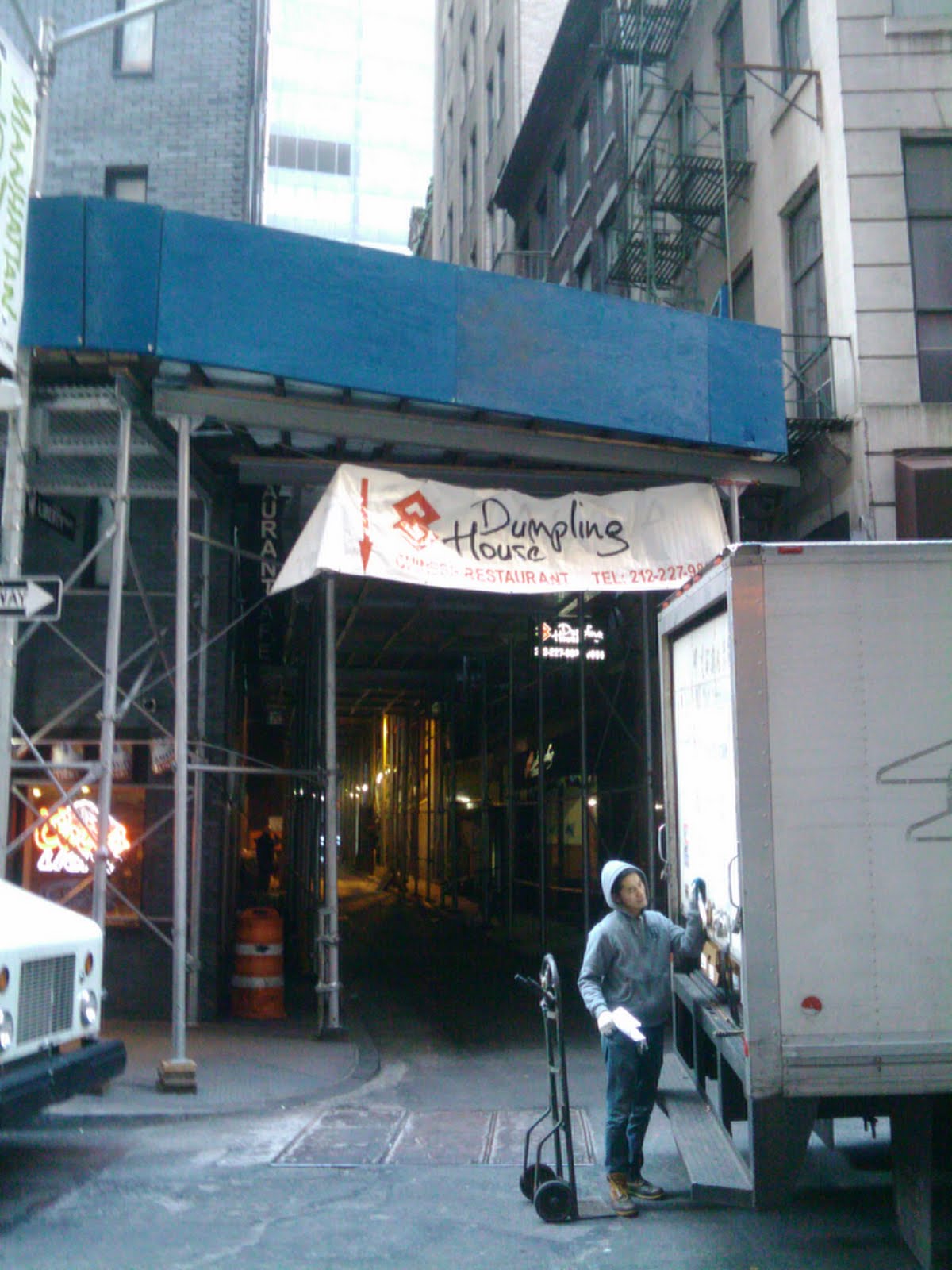
Here are some reasons to get people to shift from cars to transit:
Monday, August 6, 2018
Can we make the Central Park "drives" two way again now?
I also passed several people going the other way - riding bikes, running, walking, even on scooters. They didn't really bother me, because they're narrow and lightweight, and traveling at relatively low speeds. If anything concerned me at all, it was that they sometimes passed me on the right - their left. I could see this potentially causing problems in really crowded situations.
That got me thinking about something I've written about before: a hundred years ago New York's streets were almost all two-way, even narrow ones. One-way traffic was at first almost entirely a response to the explosion of curbside parking. Later it was extended to avenues without parking, and curbside parking was banned in some areas, in response to a massive surge in car commuting and truck freight.
I looked up some old photos of Central Park, and the drives are two-way as late as 1928. According to the New York Times, the drives were made one way on November 29, 1929. There were two stories: a front page story on November 23 quoting Police Commissioner Grover Whalen, and a November 27 story quoting Deputy Police Commissioner Philip D. Hoyt.
Interestingly, the earlier story quoting Whalen doesn't mention safety at all, focusing entirely on the need to "relieve congestion" - without providing any specifics on how bad the congestion was. This must have gotten a reaction from the public, because in the November 27 story Hoyt made it clear there was "No Intention to Make Express Motor Highways of the Drives." Well, that's reassuring!
There's the usual assertion that "those who visit Central Park on foot will find it safer to cross the drives than in the past with two-way traffic," with no explanation of how this would improve safety. Hoyt then supplies the Times reporter with a series of truly horrific stats about car crashes in the park. There were eight people killed in the park during just the first ten months of 1929, and 249 people injured!
It's abundantly clear that the primary source of danger on the Central Park loop roads, in 1929 as in 2017, was people driving cars. It's not that people never die in the Park without a car present, but the danger is not from two-way traffic flow. In fact, the one-way rules probably encourage cyclists to speed, as they did with drivers.
People already use the drives safely in both directions on foot, bike and skate. Let's make it legal!
Oh yeah, and now that the cars are truly gone, let's reopen Columbus Circle to bicycles!
Monday, January 18, 2016
We need to stop converting streets to one-way
Under Mayor de Blasio and his transportation commissioner Polly Trottenberg, the DOT has shown more timidity and more deference to unelected "community leaders," but it has continued to install safety measures and bus lanes, sometimes taking space from cars to do it. Where neither administration has been very good is on one-way streets. It's pretty uncontroversial that one-way streets have less head-on collisions. It used to also be the consensus that they are safer for pedestrians. Instead of looking for cars from two or even four directions, people crossing a one-way street only have to look in one or two (or maybe three, but who's counting?).
More recently, people have come to realize that the old consensus was too simple. Removing most of the danger of head-on collisions only encouraged people to drive faster, increasing the danger of other collisions. Drivers have to drive further to get to their destinations, adding to congestion and turning moves.
One-way streets have also had a negative effect on street life. The difficulty of navigation, and the difficulty of parking next to speeding cars, have discouraged drivers from patronizing businesses on one-way streets. The danger, noise and unpleasantness of speeding cars have discouraged walking. Stores and restaurants have closed, giving people less reason to walk. This is a vicious cycle, because just the absence of other people drives pedestrians away.
New York was an early leader in the movement against converting streets to one way. In fact, it was a plan by the City Department of Transportation to funnel cars into the Barclays Center that demonstrated the livable streets movement's growing power. Stirred by a series of Streetsblog posts, 650 people came out to speak against the DOT's proposal to convert Sixth and Seventh Avenues in Park Slope to one way.
Since then, other cities across the country have converted one-way streets back to two way. The size of the crowd was probably a factor in Mayor Bloomberg's decision to appoint a reformer like Janette Sadik-Khan as Transportation Commissioner. With the support of Streetsblog and Transportation Alternatives, and against the opposition of community boards dominated by local driving elites, the DOT rolled out bike lanes, pedestrian plazas and intersection redesigns to make streets safer.
The odd thing is that as far as I know New York has not converted any one-way streets back to two-way, either before or since 2007. I haven't heard anything about the issue from Sadik-Khan, Streetsblog or TA. The architect John Massengale wrote about street safety last month and even spent a paragraph talking about the dangers of one way streets, but for some reason did not explicitly include returning the streets to two-way in his list of recommendations.
What is even more surprising is that since 2007 the DOT has continued to convert streets from two-way to one-way. For example, under Sadik-Khan they converted 49th Avenue in Long Island City and 58th Street and Maurice Avenue in Maspeth to one-way. Under Commissioner Trottenberg, they have converted Fifth Street in LIC, and have proposed converting 77th Street in Jackson Heights (PDF).
To be fair, these streets are not like Sixth and Seventh Avenues. 58th Street and Maurice Avenue are industrial truck routes, and 49th Avenue and Fifth Street are primarily residential. Both are in areas with higher car ownership rates. These factors can explain why livable streets advocates didn't notice or draw attention to the conversions.
But those factors don't mean that we shouldn't try to stop these one-way conversions, and they don't mean we shouldn't talk about them. People need to be safe where they live and work, not just where they shop. These neighborhoods have a lot of pedestrians, and we need to protect them from the demands of the driving elites who dominate their institutions.
By the way, this applies to narrower streets too.
Sunday, May 11, 2014
The return of the mixed-traffic streetcar
Drivers are currently drawn to Manhattan under today's heavy subsidy levels, but if the subsidies are decreased it will attract less drivers. Cordon pricing is the most obvious way to do this, but it could also be accomplished with high enough prices on parking or fuel.
Imagine Manhattan one day in the Future. As it did a century ago, a streetcar again connects Greenwich Village with Soho, Chinatown, Tribeca and the Financial District along Wooster Street and University Place. It runs smoothly and quickly, even at the height of rush hour or the hottest club time on Saturday night. The reason is that, thanks a combination of bridge tolls, parking pricing and ten dollar a gallon gas, nobody wants to be driving. There are cars on the streets, but never enough to slow down the trolley.
That's the kind of environment where a mixed-traffic streetcar can work. Without something to keep private cars out of the way, streetcars are just buses with a smoother ride.
Wednesday, January 8, 2014
Ten things Trottenberg can do for pedestrians
I'm not complaining that Sadik-Khan only did one thing I asked. The things she did do for pedestrians - adding pedestrian space in plazas, calming streets with road diets and protected bike lanes - have made the city a much more pleasant place to walk. But I would like to see the other four things happen, and I have a few more. So here's the updated list, and I hope our new Commissioner Polly Trottenberg can make them happen.
Make sidewalk extensions standard. They're documented to make streets safer for pedestrians. They should probably be on every corner. In 2002, Bloomberg and Commissioner Weinshall missed a golden opportunity: they spent $218 million to install curb cuts at corners throughout the city, bowing to years of sustained pressure from disability rights advocates. They could have installed extensions at many of those corners, but of course they didn't. Trottenberg could make up for that by setting a policy that in the future any corners that are rebuilt will be rebuilt with extensions by default. Those extensions should only be omitted if circumstances argue against them, not the other way around.
Summer Streets across the Manhattan Bridge. Summer Streets has proven to be wildly popular for six years running, rain or shine, and it's time to extend it. A large number of livable streets advocates live in Brooklyn and already travel to Manhattan for the event. We could make it easier for them to attend, and bring some tourist dollars and recreation to Brooklyn, by extending Summer Streets east on Canal Street, across the upper deck of the Manhattan Bridge and down Flatbush Avenue to Prospect Park. Trottenberg may need some help from the NYPD on this: I've heard that the policing costs are very expensive, but that the police staffing levels are very much overkill, and many of those cops could be replaced by event staff with no decrease in safety.
Widen Penn Station sidewalks. Sadik-Khan has done great things for pedestrians in Herald and Times Squares, but it's well-documented that there's a heavy crush of pedestrians around Penn Station during weekday rush hours. That's where pedestrian improvements are needed the most. If you ride a CitiBike up Eighth Avenue at rush hour you'll see tons of pedestrians walking in the bike lane and buffer zone. Why not take a lane or two out of Seventh and Eighth Avenues and make them available for pedestrians?
Loading zones on every block. I've made the case that the lack of dedicated loading zones makes the city much more dangerous. The city's culture of double-parking, where "everyone does" something that's illegal and dangerous, poisons the relationship between motorists and traffic enforcement agents. Rampant double-parking encourages negligent idling practices. It also pits motorists defending their "right" to double-park against pedestrians who want narrower streets to discourage speeding, and cyclists who want protected bike lanes. The DOT is constantly reconfiguring parking on blocks around the city. What if every time they did that they set aside a space or two that was only available for loading and unloading, maximum occupancy fifteen minutes?
Allocate street space for food trucks and carts. In Midtown where sidewalk space is already scarce, there is often a bad crush around food carts. The food carts and trucks used to operate out of the street, but NYPD "crackdowns" have forced them onto the sidewalk. This is nuts. If people are upset that these carts are parking for free, or for meter rates, then the DOT can set aside some spaces where food truck operators can pay market rates for the space.
Reexamine parking restrictions. One awful legacy from earlier administrations is parking restrictions that add a travel lane or two to a street, but make it dangerous and inhospitable for pedestrians. Trottenberg could order a citywide reexamination of these zones and eliminate those that are most dangerous and least warranted.
Restore crosswalks. Similarly, there are several street crossings that are missing one or more crosswalks. Parts of Seventh Avenue South feel like a highway instead of a boulevard because there are no crosswalks for streets like Leroy Street and Waverly Place. There are other intersections - the corner of Forty-Eighth and Northern here in Queens comes to mind - where there are crosswalks on only three sides. Trottenberg should have the DOT staff look at all intersections that don't have crosswalks at all sides, and see if restoring the crosswalks could make the intersections safer and more comfortable for pedestrians
.
Restore two-way flow. When Bloomberg hired Sadik-Khan, he told her that she could change the traffic flow on Fifth Avenue. This was supposedly a big joke, but I totally think Trottenberg should do it, and De Blasio should back her up. The city's avenues were converted to one-way for one reason only: to give the city's driving elite priority over its walking majority. If we no longer want to do that - if De Blasio wants to end that "tale of two cities" - then the single biggest change that will make our streets livable again is to eliminate all multi-lane one-way streets.
Rebuild the Queensboro Bridge pedestrian paths. This is a big, expensive project, but it would be a lot cheaper than the hundreds of millions the DOT has spent making the Brooklyn Bridge and the Belt Parkway easier for drivers. Right now we have a sidepath that is bearable if you're on a bike, but once I walked it with my son and the noise was really unpleasant. Compare the Queensboro Bridge experience to that on the Brooklyn or Williamsburg Bridges and you see that the grade separation makes a huge difference. But this should only be done if the outer decks are both returned to exclusive transit use.
Cherish our Really Narrow Streets. Nathan Lewis argues that Really Narrow Streets privilege the pedestrian and create an opportunity for intense commerce that cannot be matched by any street wide enough to handle cars and pedestrians together. We've got some of those here, but we give cars priority and cover them in scaffolding. Trottenberg should take a look at some of Lewis's examples and see what we can do to make them places where New Yorkers want to be.
Tuesday, December 4, 2012
Tweaking congestion
1. Decide on a speed limit based on the pedestrian, cyclist and built environment you want to see along this road. That's what you put on your signs.
2. Design the road so that 85% of drivers will feel comfortable traveling under that speed.
There's a problem with that, though. The speed at which people feel comfortable driving - and of course the speed at which people can drive - depends not only on the street design, but on the level of congestion. If things are more congested, people drive slower. Less congestion, they drive faster.
This is a problem because the level of congestion can change for all kinds of reasons. A new destination may come into existence: a new housing development, a new workplace, a new shopping or entertainment area. A new road or parking lot may be built, making a connecting road more attractive. A parallel road or transit line may be closed or have its capacity reduced.
When the demand for the road increases but the capacity stays the same, so does congestion. Governments have a number of ways of increasing the capacity of the road to keep congestion down and keep traffic flowing, without having to completely redesign and rebuild the street. The top two strategies are removing parking and changing the direction of traffic.
The picture above is West Tenth Street in Greenwich Village. Note that there's two-way traffic, but hardly any parking. Here's the same corner from earlier this year:
The relatively narrow horsecarts have been replaced with larger cars and trucks. There are more of them, and they're moving faster. Sometimes people want to park them, especially overnight. All of that led to greater demand, so the city converted West Tenth Street into a one-way street. It's not clear whether there was ever parking on this block, but there doesn't seem to be any now, at least at the time of day that I took the picture. The left side of the street has been converted into an exclusive bike lane.
What is bad for pedestrian and cyclist safety is when demand for the road goes down: a destination may disappear, a road or parking lot may be closed, a parallel road or transit line may open. But the government so rarely uses these tools in the other direction. There are legitimate fears of motorist confusion causing crashes, but I believe it's been shown that if you can manage things well, people adjust.
Some in government may see the added speed as a bonus for drivers. That may be, but if the speed goes above safe levels, it's not much of a bonus for everyone.
The government shouldn't simply take away parking and make streets one way. People should monitor speeds and make sure that they don't exceed the chosen speed limit by too much. If the 85th percentile speed is too much higher than the chosen speed, then the government should look to make a street two-way or add parking until the drivers slow down.
Congestion also varies with the time of day, but that's a different post.
Tuesday, October 2, 2012
Why Fifth Avenue is so great
Okay, we actually just drank a lot of root beer and watched Star Trek until midnight. But after that, we walked on Fifth Avenue. Fifth Avenue was great after midnight.
It wasn't great in a dramatic way, like Saint Mark's Place might have been. It was quiet and beautiful, and it felt safe.
I could have walked home through Central Park, but it still had a reputation for being unsafe at night. I could have taken the crosstown bus, and sometimes I did, but those were infrequent, and crowded when they did come. When the weather was nice it was better to walk.
I walked down Fifth, across Fifty-Seventh Street and up Central Park West. Fifty-Seventh was also great after midnight. The Steinway piano showroom with its convex window was still lit up, and there was always a deli or a cafe open late. Without the crowds, the wide sidewalks were luxurious.
I recently listened to an old KunstlerCast, one of the best, called "Missing Teeth in the Urban Fabric." There's a ton of great stuff in that episode, but one of the best is Kunstler's summary of a discussion by the architect William Rawn about why Fifth Avenue works.
Fifth Avenue is what Rawn calls a "one sided street": it has buildings on one side and a park on the other. Like Rawn, I've seen a lot of one sided streets, many of them probably inspired by Fifth Avenue, that didn't work as pedestrian spaces.
In my neighborhood there's a section of Queens Boulevard that runs along a cemetery. Like Fifth Avenue it has an unbroken stretch several blocks long with a wall, trees and maybe a bench or two. Unlike Fifth Avenue it feels deserted, exposed and unsafe. Most of the pedestrians in the neighborhood avoid it.
Why do Fifth Avenue and Central Park West feel so quiet, beautiful and safe, while Queens Boulevard does not? Here's what Rawn has to say on Page 42 of his thesis (PDF):
Upper Fifth Avenue is a well-known street. Though not a commercial street and admittedly quite different from the Fifth Avenue south of 59th Street, nonetheless it is exceedingly vibrant and full of activity. Here is a street which has no shopping and yet is always full of people. Some are walking fast with a strong sense of mission; others are simply strolling. It should be noted that the strong side of the street is marked by a series of apartment and hotel buildings usually 10-15 stories high. The weak side, along the park, is marked by a set of factors of continuity. There is a high wall (seven feet high, too high to see over) running along the edge of the park. There are several rows of trees paralleling the street. There are periodic openings to the park but these usually occur every three or four blocks. Walking along this street, one is not really part of the park, except that the trees and sometimes the hills of the park can be seen over the wall. One knows that he is part of the street; one sees what is ahead and behind. There is a sense of balance. In effect, one does not feel he is about to fall off the edge into an undefined park setting, but instead feels that he is part of a well defined street setting.
Rawn goes on to talk about three other "spines" (the Alamitos Bay Boardwalk in Long Beach, California; the Rue de Rivoli in Paris and the cafe fronts of Ibiza), but Fifth Avenue is enough to talk about tonight. The walls are definitely not seven feet high in the picture above; I think they're only four feet, but the trees behind them create a barrier that is opaque but not blank. They may be seven feet high north of Eighty-Fifth Street.
Regardless, I think Rawn is right about the value of the walls defining the space. Compare that to any place where there is a tall fence, like the Queens Botanic Garden. You can see into the garden, so the visual separation is not sharp, but the height of the fence makes it feel inaccessible. The regular openings in the Fifth Avenue walls are also important, because they make it clear that the wall is a boundary, not a barrier.
Queens Boulevard along the Calvary Cemetery in Woodside has a high wall and at least one row of trees paralleling the street, but there is only one opening to the cemetery on that side. The wall is at least seven feet high, maybe nine.
What Rawn doesn't note is the luxuriousness of the pedestrian environment along Fifth Avenue. The street is a hundred feet wide in some places, the same width as many of the most dangerous streets in the city, like the Bowery in Manhattan, 21st Street in Queens, Broadway in the Bronx and Atlantic Avenue in Brooklyn. So why does it feel so nice to walk on? Maybe because there are only two lanes of general traffic, a bus lane and a parking lane, for a total of four lanes for motor vehicles, spanning only forty-five feet. The rest of the street is available for pedestrians: twenty feet on the east side and thirty-five feet on the west. That western sidewalk is not all paved, but much of it is available for walking or standing, and there are many benches.
This immense width has an interesting effect. When I walk down Fifth Avenue I don't mind not being inside the park, because the Fifth Avenue sidewalks are themselves a kind of park. With the line of trees, sometimes I can even ignore the cars and just think of the sidewalk as Fifth Avenue.
By contrast, on Atlantic Avenue the cars have four travel lanes and two parking lanes, for a total of sixty feet. The sidewalks are twenty feet each, relatively generous for Brooklyn, but not wide enough to give that feeling of luxury. Queens Boulevard by the Calvary Cemetery is two hundred feet wide, with only fifteen feet of sidewalk. Of the sidewalk on the south side by the cemetery, only ten feet are usable; the rest is depressed grass filled with litter.
This is what I take away from Rawn's study, what makes a good one-sided street. You need a wall, not a fence and not too high, and you need gaps in the wall. And this is what I add: you need wide sidewalks.
Finally, let us all give thanks that this "multiply signed" petition from 1905 to tear down the Fifth Avenue wall and "create a new Park drive and bridle path" never went anywhere.
Saturday, September 22, 2012
The Great Curbside Land Grab of 1947-1952
In previous posts I've talked about how it was illegal to park your car overnight in New York City in the 1940s, how car ownership got out of the NYPD's control, how the car owners developed a sense of entitlement, and how the media and politicians sympathized more with car owners than with anyone else.On Tuesday I described how in 1952 Mayor Vincent Impellitteri proposed an overnight parking tax of $5 per month, an "automobile use tax" of $5 per month and a city gas tax of 2¢ per gallon. This was in response to a budget crisis - you thought there were no budget crises before the 1970s? - that may well have been brought on by the city building so many new roads without any new money to pay for them.
As I wrote on Tuesday, it's generally a bad idea to let someone use your stuff for free if you plan on charging them for it in the future. If you set expectations well - in other words, make it clear that you're doing them a favor and tell them exactly when you want them to start paying - it may work out just fine. The worst thing you can do is just kind of let them grab your stuff and then appeal to their sense of charity. That implies that they have a right to your stuff, and you'd let them have it for free indefinitely if you had enough money.
The worst thing is exactly what Mayor Impellitteri did, and it turned out as bad as you'd expect. From what I can tell, the State Legislature did not give the city the right to levy an "automobile use tax"; otherwise Bloomberg would have just done it. They also did not allow the city to charge a per-gallon gas tax, although the city does charge a 4.375% sales tax on gasoline. However, they had already given the city the right to charge for overnight parking in 1947.
On February 22, the City Council passed a home rule measure assenting to the change. And then the backlash began in earnest. On March 12, Acting Traffic Commissioner T.T. Wiley went to the Times to complain about how much of an administrative "headache" the $60 overnight parking fee would create, and on March 18, the president of the Automobile Club threatened "serious trouble" if the city went ahead with the fee. On April 4, a group of seven City Council members announced their opposition to the automobile use tax and the overnight parking fee. On April 14 it was the turn of the City Comptroller, Lazarus Joseph.
Critically, the Council and Joseph ignored the entire possibility that drivers might have some obligation to pay even a part of the upkeep of the roads that they used. The Pigovian, and now Shoupian, idea that free parking can cause people to drive more, making the city a worse place, was not even considered. The entire focus was on finding "alternative sources of revenue" - anything besides car use to tax, or even short-term gimmicks.
In the end, the Board of Estimate vetoed the overnight parking fee. For those who don't know, the Board of Estimate was a crazy, undemocratic institution that ruled the city for ninety years. It was an executive council consisting of the Presidents of each of the five boroughs with one vote each, plus the Mayor, the Comptroller and the City Council President who had two votes each.
The Board of Estimate was deposed in 1989 when the United States Supreme Court ruled that its power violated the Fourteenth Amendment guarantee of equal protection, because Brooklyn's 2.3 million inhabitants had the same vote as Staten Island's 378,977. Imagine if the city today were controlled by a group consisting of a few mostly reasonable people like Mike Bloomberg, Scott Stringer and Ruben Diaz Jr. paired with faux-populist panderers like Christine Quinn, John Liu, Marty Markowitz, James Molinaro and Helen Marshall.
Back in 1952 the Board still had all its power, and on April 21, in the words of Times reporter Charles G. Bennett, it "informally decided to leave it to Controller Lazarus Joseph and his aides to turn up sufficient alternative sources of city revenue to justify dropping further consideration of what promised to be the most controversial and most sharply attacked item of Mayor Impellitteri's tax program." And that was it. The drivers had been squatting on city streets for free for five years, and they have continued for another sixty.
Another interesting angle to the story was that in all the New York Times articles I could find about the issue, the only people in favor of the overnight parking fee were members of the Impellitteri administration, and their arguments were couched entirely in terms of fiscal need. No citizens groups were quoted on the pro side of the issue to balance out the Automobile Club and their members. It is not clear if there was anyone.
It's a striking contrast with the city's installation of bicycle facilities, where every new project is challenged with a statement along the lines of "Cyclists need to start obeying the law and respecting pedestrians before they get any more lanes." If motorists had been held to that standard in 1952, they'd all still be parking in garages.
Tuesday, September 18, 2012
How not to deal with parking moochers
In previous posts I've talked about how it was illegal to park your car overnight in New York City in the 1940s, how car ownership got out of the NYPD's control, how the car owners developed a sense of entitlement, and how the media and politicians sympathized more with car owners than with anyone else.
When 1952 began, it was still illegal to park overnight in New York City, but I get the impression that the ban wasn't enforced very much. Then Mayor Impellitteri made a dramatic speech to the Chamber of Commerce. He began by saying how proud he was of the city, especially when Winston Churchill "marveled that we could ride along the Belt Parkway without encountering a traffic light for miles," but then turned around and said, "it's lucky we weren't traveling through our business and garment industry districts at that hour." Way to sell your city, Mayor!
Impellitteri went on to propose not just a $5 per month fee ($43.47 in today's dollars) for overnight parking, but a $5 per month "automobile use tax" and a city gas tax of two cents per gallon. (A cigarette tax too.) That's terrific, and it's essentially what Mayor Bloomberg, Lieutenant Governor Ravitch and many others have campaigned for in the past five years. And it was necessary because it costs a lot of money to maintain the roads and bridges that the cars drive on all day and park on all night. Someone has to pay for it, and it was bankrupting the general fund. Did Mayor Impellitteri say that? No, like our wimpy housemate he appealed to the drivers' sense of civic duty.
Yeah. I think you can figure out how that went. But I'll have more details.
Sunday, September 16, 2012
PIty for the rich and fake populism in 1940s New York
What is clear is that in 1912 curbside space was a resource that was available to anyone, if underused, and in 2012 it is restricted to people who own a car and want to park it. But the responsibility for maintaining and cleaning this space is a public obligation, paid for by everyone, whether they drive or not, through sales and income taxes.
As I wrote last week, the New York Times archives tell us that between 1912 and 1947 New York City had seen a huge increase in car ownership, but it was still illegal to park a car at the curb overnight. Due to a previous Empty Promise, most of these new car owners had not budgeted for garage space, so some of them parked on the street illegally. Others paid for garage parking, but not enough to generate profits for the garage owners, so the garage owners boosted their revenue by parking people's cars on the street instead of in their garages.
Even in 1949 people are getting ready for a Fake Populist Resource Grab. In the Fake Populist Resource Grab, you start with a group of people who are stuck. They went out and bought a car or a house on Staten Island, or started a business, or bought a taxi license. They never expected to have to give up double-parking, or pay for the bridge or the trains, or compete in an open market. But now someone is telling them they have to.
Then somehow (and I'm never quite sure how they do it) they get pity. No matter how rich they are, or how unfair their position already is compared to those who don't have that car, that suburban house, that restaurant, that taxi medallion, their plight somehow provokes a gigantic outpouring of sympathy from the media and politicians. Even people who have viciously punitive attitudes towards the homeless and hungry somehow manage to feel all tender and solicitous.
In the case of overnight parking, people felt bad for the drivers who had no garages to park in. Bob Moses, in his letter to Mayor Impellitteri, said that the "solution of the parking problem" is to build new garages for all the people who didn't budget for garage space. He wanted to use revenues from existing parking facilities to build new garages, but not for transit. Of course, he wanted street and parkway maintenance to be paid out of the general fund.
As I said before, with the number of cars there were in 1947, it made sense to park some of them on the street overnight. Nobody else was doing anything with that space in the middle of the night. But it also made sense to charge people something for the privilege of using that space. The city thought so, and in 1952 the State Legislature passed a law allowing overnight curbside parking and authorizing the city to charge up to $60 for an annual parking permit.
As we all know, the overnight parking certainly happened. The sixty dollar fee, not so much. Tune in soon for the details...
Wednesday, September 12, 2012
The right to free parking in 1940s New York
I feel like I should take some time to address the entitlement issue. First of all, as "Old Urbanist" Charlie Gardner commented on my first post in this series, the streets were too wide to begin with: "If the carriageway is excessively wide for the needs of traffic, as many American residential streets are, you may as well park cars along it." In the middle of the night, that was certainly true of every street north of 14th, and most of the ones south of it. The drivers saw it as wasted space, and it was. They needed space to store their cars, the city had it. Why not put it to use?
Honestly, I agree with that. The real issue is not why the curbside lanes were used for overnight parking, but why it's free. That's an issue of middle class entitlement.
At first most of the car owners were wealthy, and it has been scientifically proven that wealthy people find ways of justifying their advantages in society. After World War II, rising prosperity and greater efficiency put car ownership within the reach of less wealthy Americans, and governments were flush with cash and made it a priority to provide more and better roads and parking for this segment of society. Car ownership was seen as increasing mobility and thus a gateway to middle class status.
This conception of the benefits of car ownership has always had a huge bait-and-switch component to it. In New York City in the 1940s it was no exception. When people looked at the price of a car, they didn't figure in $20-35 per month in garage rental. When they got their cars, many couldn't afford to pay and took their chances on the street. Garage owners now had to compete with free street parking and lowered their rates accordingly, which meant that they didn't have enough income to expand their facilities, and resorted to bribing the police.
These social-climbing drivers felt cheated, but they didn't take their anger out on the car dealers. No, they felt that the city owed them the free parking necessary to make their cars as affordable as they thought. To be honest, I still don't quite understand that thought process, but it pervades the city to this day.
Up to now I haven't mentioned a significant presence in this whole affair: the Automobile Club of New York, the local chapter of the American Automobile Association. The Automobile Club are still around today, spreading misinformation about the not-so-historical Bronx end of the Bronx River Parkway in order to grab more of our tax dollars for road projects.
The Automobile Club's fingerprints are all over this one. They pop up in a lot of these old New York Times articles, constantly pushing the idea that drivers are uniquely entitled to free street storage for their personal property. We'll see how that plays out in the next post.
Monday, September 10, 2012
How the overnight parking ban broke down
At that time, the legal thing to do if you owned a car was to rent overnight space in a garage, which cost roughly $20-35 dollars per month. If you paid more, the garage would send a valet to pick up the car in the evening and drop it off again in time for you to go to work in the morning.
Some people could afford cars, but didn't want to pay for a garage space, so they tried to park illegally. Sometimes they were ticketed, but more often they got away with it, because the police simply didn't have enough officers on patrol at night. In April 1947, the Times's Joseph Ingraham reported that a "confidential telephone command" had gone out to all police precincts directing them to only ticket cars that were parking hydrants or otherwise causing unusual hazards. When news of the order became public, however, Police Commissioner Wallander (not the fictional Swedish detective) immediately denied that it had come from his office, and declared "I am opposed to overnight parking and summonses will be issued as before."
It wasn't just individual car owners that were parking on the street. The Automobile Club of New York and several politicians claimed that parking garage staff would charge customers to park their cars, and then turn around and put the cars on the street. Charles Wolf, a skin care specialist, testified to the City Council in June that the garages had a deal with the police. "The license plate, which is supposed to be a holy piece of metal with nothing on it but what is assigned by the Motor Vehicle Bureau, has in certain areas an insignia in the form of a circle, white or red, and that car is not touched when parked overnight. Why? I will leave that to your imagination."
In 1947, then, the situation is becoming unmanageable. The city got some people together and came up with a plan. It wasn't a bad plan, but it got hijacked along the way. Stay tuned for that story...
Tuesday, September 4, 2012
When overnight curbside parking was illegal
I've heard good things about Norton's book, but I haven't yet read it. However, I was able to get some of the story from the New York Times archive, and it's a fascinating one. To begin with, yes, it was originally illegal to leave a car parked on the street overnight, the same way it was illegal to leave any of your personal property in the street.
When people drove carriages and carts around, of course, they tied them up in the street. So during the day, street parking was allowed. If you had a horse and carriage, however, you didn't leave it on the street overnight. The horse could easily be stolen, and was vulnerable to bad weather. City dwellers kept their horses and carriages in carriage houses, like these in Greenwich Village:
If your family history has stories of Great-Uncle Shlomo working long hours as a tailor to start his family on the Lower East Side, you can bet that Shlomo didn't have a carriage house to go with his fifth-floor cold-water walk-up on Rivington Street. Carriage houses were for two classes of people: those who needed them for work, and those who were wealthy.
That started to change with cars. Someone figured out how to lock a car's ignition so that it was hard to start without a key. Someone else figured out how to lock the whole thing up. They were heavy enough so that you couldn't drag them away without a tow truck. So why not leave them in the street?
To be honest, the only reason I can come up with is simply that the streets are public common spaces, not intended for the free storage of private property. And that of course leads to the question why it changed. If you think about it, it is kind of bizarre that the city devotes a sizable chunk of its public land, and a significant portion of its transportation and policing budgets and personnel, to helping people (roughly speaking, the second-wealthiest quartile of the population) to store their private property free of charge.
Reading the Times archive, it's clear that nobody in city government ever intended to do this. It was a fascinating combination of popular revolt and political chicanery - and it's even possible that the revolt was manufactured and it was all chicanery. Stay tuned for details.
Thursday, August 16, 2012
A superficial charm
The main reason I'm sharing this with you is contained in the very first paragraph: the proposal that Impellitteri made to Moses. In his reaction, Moses was wrong in several respects, including his ideas that the construction of off-street parking would constitute a "solution of the parking problem" and that tolling the four "free" East River bridges would "serve no immediate purpose, at least so far as the current rapid transit deficit is concerned." He also shows his characteristic double standard where it is expected that the government will subsidize roads and parking, but transit is expected to pay its own way.
On the other hand, I think he's right that the demands for transit expansion, fare stability and high wages in the context of heavy public investment in the competing road network were as hard to reconcile then as they are now. Turning everything over to an autocrat is not a way to build long-term consensus.
You'll find the letter below. Bonus: I also found an interesting television interview with Moses, "the nation's foremost city planner," from 1953.

Moses and Impellitteri inaugurate the Central Park Carousel in 1951.
Photo: New York City Parks Department.
Dear Mr. Mayor:
You have asked us to comment promptly on a suggestion that a substantial part of the city's financial problem might be solved by expanding the functions of this authority to include all rapid transit, all private and publicly owned bus lines, all automobile parking (including parking meters and parking garages as well as overnight parking), the Staten Island ferries and all existing East River and Harlem River bridges on the assumption that these will become toll structures. The present rapid transit debt would continue to be serviced by the city, along with future improvements and extensions.
We pointed out in a report to Mayor O'Dwyer, dated Oct. 7, 1949, in answer to a request from him for a frank analysis of the proposal of former Corporation Counsel Paul Windels to establish a Transit Authority, that we did not believe such an authority, which it was proposed would finance improvements and extensions of the rapid transit system as distinguished from the existing debt and operate on a completely self-supporting basis, could sell bonds and remain solvent unless it had a free hand to raise fares at will, without public debate and popular approval. Our final conclusion was that the authority device was not the answer to the city transit problem at that time.
The present suggestion differs from the Windels proposal in other respects beside the fact that it does not involve the assumption of any responsibility by the authority for any construction work or for the deficit for the coming year. The suggestion also differs materially from Mr. Windels' proposal in that back of it is the idea, in our judgment without validity, that a huge new solvent and successful quasi-public structure can be established by placing the credit of the Triborough Bridge and Tunnel Authority back of rapid transit and related operations, adding tolls from presently free bridges, throwing in revenues from parking, and finally establishing substantially higher rapid transit and bus fares.
Let us analyze this plan in somewhat greater detail, and give the facts for our objections to it. To begin with, the Triborough Bridge and Tunnel Authority represents a consolidation of toll crossings and their approaches and related facilities, only recently refinanced on exceptionally favorable terms, which, among other things, will enable us to complete essential approaches, connections and extensions, the cost of which otherwise would fall on the city, state and Federal governments as part of the metropolitan arterial program.
The proposed Columbus Coliseum is the only project we are undertaking which is not directly connected with the main arterial toll system. This authority has established a first-rate reputation because its program is definite, limited and financially sound. We propose to keep it that way.
Under our recent financing, all our future revenues are pledged to our bondholders up to and including the year 1969. We cannot divert any of these revenues. We are trustees. No purpose would be served by discussing in this memorandum the possible use of revenues of this authority after 1969. Certainly this credit cannot be used now for other purposes. Moreover, it should be pointed out that long before our present debt is paid off, there will be other crossings and approaches required, which it will not be possible to finance in any other way than through the issuance of additional bonds.
It is only necessary to refer to the fact that the state has a highway program of over $3,000,000,000, more than a billion of which is urgently required, which it has been unable to finance, and that the toll principle for arterial construction has now been established by the state in connection with its Thruway system. Similarly, Federal highway funds have shrunk as costs of construction have risen. In any event we must assume that no margin of credit derived from our present toll structure can be used to rescue less successful enterprises in other fields.
Similarly, we do not support the idea that the rapid transit deficit can be reduced by parking revenues. Parking revenues from meters, parking fields and public garages, overnight parking, etc., are required for the construction of off-street facilities, and there would be no conceivable surplus available to sweeten the rapid transit situation. If the parking revenues are used otherwise than for off-street facilities, there will be no solution of the parking problem, which is if anything more serious at the moment than the rapid transit deficit.
The addition of the Staten Island ferries as a function of this authority would simply add another headache. Even if the fares were doubled there would still be a substantial deficit in the operation of these ferries.
The transfer of existing East River and Harlem River bridges to this authority as toll structures has a superficial charm which upon closer study is very quickly dissipated. Even if we assume that the public would go along with such a proposal, which we greatly doubt, and if it were in the merest of free movement of traffic to do so, which is also highly debatable, the cost, delays and inconveniences of this conversion would be enormous. We have estimated this cost at between $80,000,000 and $100,000,000. It would take at least three years to bring about. A recent careful estimate of the costs of converting to tolls the most heavily traveled of these bridges, namely the Queensboro Bridge, was $10,000,000. It would be necessary to provide additional ramps and levels, toll booths, and other facilities, and extensive land is required for these purposes. Twenty-year bonds would be needed for this purpose. Certainly this dubious and unpopular device would serve no immediate purpose, at least so far as the current rapid transit deficit is concerned. During the period of conversion and reconstruction of the free bridges, there would be many other additional expenses including the entire replacement of one bridge, namely that carrying Broadway over the Harlem Ship Canal.
It must be apparent that the real purpose back of any such expansion of the functions of the Triborough Bridge and Tunnel Authority is to raise rapid transit fares. This is the only device which will produce really substantial additional income. The statements which have been made regarding savings in operation through superior management by this Authority are no doubt flattering to its members, but cannot stand impartial analysis. We must bear in mind that it is both a state and city policy to establish a general forty-hour week, to grant increases in pay to meet the increased cost of living, and also to provide new and better facilities especially at rush hours.
The expenditures required for the new Second Avenue railroad and the other extensions of the agreed city program in the several boroughs, which will cost at least $550,000,000 not including rolling stock, will not produce substantially higher net revenues, no matter what is the basic fare. In other words, there will not be proportionately more riders as the result of these improvements, although riders will travel much more comfortably and not under present inhumanly overcrowded conditions. To put it another way, this expansion will represent a redistribution of present riders rather than large additions to the total.
No doubt economies can be made in the operation of the rapid transit system through better, tougher and more businesslike administration, but these economies will be relatively small and will not materially change a picture involving a $70,000,000 deficit for the year 1952-53. We must add to this figure also an additional $10,000,000 loss if the private bus lines are put under public operation. There must also be under prudent management a depreciation fund to keep equipment up to date and make normal replacement in the system, totaling some $40,000,000. Finally we must add in the $3,000,000 from ferry operation, which brings the grand total of present deficiency up to $123,000,000. We figure that to make up this deficit would require a subway fare of 17½ cents and bus fare of 17½ cents with no combination rides. At the same time this authority would be faced with the same clamor for extension of rapid transit and bus lines (whether or not they were economically sound) as is the present Board of Transportation.
It must be quite obvious, aside from the many political implications, that the determination of any such large increase in fare is one of policy to be decided directly by the people of the City of New York, and not one which can be brought about by the device of expanding the functions and responsibilities of the Triborough Bridge and Tunnel Authority, even assuming that its present members could be induced to be parties to any such arrangement.
As to more economical operation, there are no figures available, nor has there been an study made, which shows just what could be accomplished. The authority would have to deal with the same Civil Service rules and regulations and Civil Service employes as does the Board of Transportation. The authority would be faced with the same demands from the same unions as is the Board of Transportation, some of which we pointed out in our last report must, as a matter of simple justice, be granted.
It is therefore our conclusion that the suggested expansion of the functions of this authority is unsound and that other more practical, more direct and more immediate means must be found to solve the city's present financial problem.
Very truly yours,
Robert Moses, chairman,
George V. McLaughlin,
William J. Tracy.
Tuesday, August 14, 2012
Shit we can't keep in the street
There are some things that used to happen in the streets that now happen in parks, or not at all. Jane Jacobs gave several reasons why it was better for children to play in the streets than in parks, not least because they had a much better chance of having positive interactions with adult men in the streets. But now kids can't play in the streets, because there are too many cars and they drive too fast. Kids can't spend too much time playing on the sidewalk, because it's too close to the moving cars.
On my post from Sunday, Alai commented, "there are a lot of sidewalk "encumbrances" which I'm fond of: on commercial streets, for example, stores rolling out display cases with vegetables or books or other wares to entice the passers-by, cafe tables with people sitting and watching, etc." I agree, and I feel similarly about stoops, benches and porches. But in the commercial districts of Manhattan, many of them were cleared so that the street could be widened. I used to feel that way about news boxes and telephone booths as well, before cell phones and the Internet.
Here's some more shit that we can't keep in the street. A reader sends in this quote, from a letter he got from the president of his co-op board:
Additionally, we want to ask everyone who walks a dog to not let them defecate on the sidewalk. While we recognize that our community members cleanup after their dogs, there is still enough residue that people are picking up feces on their feet and walking it into our buildings. Those who grew up in the city are aware of a time when no one would allow the dogs to use the sidewalk as a toilet location. People walked their dogs on the street.
Like this co-op president, I remember when this sign was all over the city in its sans-serif, period-free glory:
Nowadways I find pages on the web where people don't understand the sign, because they don't know what it means to "gutter" a dog. Before everyone walked around with plastic bags, before there were pooper-scoopers, you just made the dog shit in the gutter, in between the parked cars. But then people started parking the cars too close together, and it stopped being safe or comfortable for the dogs, so now people let the dogs shit on the sidewalk. And it gets on our shoes.
Before that, people just let the dogs shit right in the middle of the street, where the horses shat.
You might be a little uncomfortable with the idea that the streets should once again play host to both children and dog shit, but these streets are actually pretty big places. On any given block there's room enough for the dogs to play in one place and the kids to shit in another. I mean, you know what I mean. And more: when my mom was a little girl, she tells me that her dog used to sleep in the middle of the street. People would just drive around her.
How did this change? Tune in again soon for more.
Sunday, August 12, 2012
Sidewalk encroachments and encumbrances
Feeney only skimmed over an important issue: that the sidewalks could be widened to accommodate this demand. Dan Biederman "concedes that too-narrow sidewalks ... add to the frustration," and Wally Rubin mentions "the need in certain cases for the sidewalks to be widened." She ends with a quote from Mitchell Moss, but neglects to mention that when she talked to Moss in May, the first thing he told her was that the sidewalks should be widened.
Sidewalks have been widened right there in Manhattan, in the recent past. The most famous example is Times Square and Herald Square, where some of the parking lanes on Broadway and Sixth and Seventh Avenues were converted to sidewalk space with planters and flexible bollards years before Janette Sadik-Khan reclaimed a larger chunk of space. Under Sadik-Khan, the DOT has widened sidewalks in other parts of the city, including Main Street in Flushing. It can and should do more.
In many cases, widening the sidewalks would actually reverse an earlier narrowing. In a recent disgrace, Sadik-Khan's DOT carried out a sidewalk nibbling planned under her predecessor Iris Weinshall at 96th Street and Broadway, where the median was widened to install a subway headhouse. The DOT refused to take that space from drivers, and took it from pedestrians instead.
It is expensive to move curbs, but it can be done when the will is there. The largest example was in 1908-1909, when the City widened Fifth Avenue, 23rd Street, 34th Street, 42nd Street and a number of side streets. There is a summary of the widenings (with badly scanned photos) from 1912.
The articles all argue that whatever width was taken away from sidewalks was made up by removing "encroachments." This is a phenomenon that we're all familiar with, where business owners and residents will appropriate some of the public sidewalk for their own use. Just this spring, Jackson Heights Councilmember Danny Dromm and the Department of Buildings pressured a supermarket to remove an illegal enclosure. According to the Times back in 1908, many of the stoops, hedges, walls and porches in Manhattan were illegally "encumbering" the sidewalk.
Of course, you'll note that the space freed up from the "encroachments" was originally sidewalk space, not street space, so it was still a reallocation in favor of the street. The Times's 1912 summary makes it clear: "the Board of Estimate has taken the position that the tremendous growth of street traffic requires the freeing of every foot of available space upon the more crowded thoroughfares." The rest of the article makes it clear that they are talking about car traffic, not foot traffic. They needed to maintain the available sidewalk width, because pedestrians were no longer safe to walk in the street.
The world has been dealing with pedestrian crowding for centuries, but sidewalk crowding is a relatively recent problem. What Mitchell Moss said last week is right, in that it is the kind of problem that is much better than its opposite. That's what's often called a first world problem, but in this case the "first world" (mostly the United States) suffers more from the problems associated with empty sidewalks, like obesity, asthma and soccer mom-ism.
I'll write soon about some more shit we can't keep in the street.
Friday, August 3, 2012
There's no magic bullet for safer streets
The thing is that I can't come up with a single magic bullet, because there are multiple factors involved: vehicle speed, driver inattention, driver entitlement, low visibility. There are numerous changes that have gone on since the picture above was taken that have increased the danger on our streets. The most obvious is that horse-drawn carts and carriages have been replaced by cars, and the cars have been "improved" to the point where they accelerate faster and reach higher speeds. As they have been outfitted with more comfort, better windows and better sound systems, drivers have become more insulated from the outside world. Cell phones, music and food distract them from the street.
The law plays an important role. In his book Fighting Traffic, Peter Norton describes changes in the laws that gave priority to drivers and placed the fault of a crash on a pedestrian who was outside the crosswalk. Sarah Goodyear has a nice summary. The police cooperated, to the point where at least once a week Streetsblog has a post on a crash where a pedestrian or cyclist is killed or severely injured, but the NYPD undermines or blocks the course of justice.
But it wasn't just the cars that allowed drivers to go too fast for safety. The streets allowed it too. Even before the automobile was invented, there was a fad in North America for wider streets. Nathan Lewis calls it "19th Century hypertrophism." It included a number of arbitrary criteria, such as that a carriage driver had to be able to turn a team of horses around in the main street.
This width gave drivers lots of room to maneuver around each other and around streetcars and other things in the road. They responded by driving at high speeds; this is played up in the 1928 comedy "Speedy," which features lots of great location scenes in New York streets; here's a clip where taxi driver "Speedy" (Harold Lloyd) gives Babe Ruth a ride to Yankee Stadium.
The nice thing about having so many factors involved is that it gives us lots of options for rolling them back and regaining safety. Of course, with so many factors, any one of them is almost certainly not going to do enough.
- Make cars slower
- Make cars less comfortable
- Make people stop using cell phones, listening to music or eating on streets
- Change the laws to give pedestrians higher priority
- Set a lower speed limit
- Hold drivers accountable
Those aren't the only factors. If they were, I'd be discouraged because so many of them are politically difficult. In a future post, I'll talk about parking. In the meantime, what do you think of these?